Control cabinets can either accelerate throughput or become a chronic bottleneck. The difference often comes down to how you specify and integrate the panel. This post examines how to optimize automation controls with OEM panels, focusing on practical tradeoffs that affect commissioning speed, reliability, and scalability.
Using real-world design patterns, we will show how to evaluate automation controls oem panels against your control architecture. You will learn to align PLC and I/O selection with network topologies, manage thermal loads and power quality, and design enclosure layouts that improve noise immunity and serviceability. We will cover compliance and safety categories, firmware lifecycle control, and cybersecurity that does not compromise determinism. Expect analysis of cost-of-ownership metrics, including OEE impact, MTTR, spare parts strategy, and vendor lock-in risk. We will also touch on diagnostics and remote monitoring to shorten troubleshooting. By the end, you can benchmark OEM offerings, avoid common pitfalls, and write specifications that yield measurable performance gains.
The Evolution of OEM Control Panels
Industry 4.0 is redefining control panel design
Automation controls OEM panels are shifting from isolated relay logic to connected, data-centric assemblies. Industry 4.0 brings IIoT sensors, AI-driven analytics, and scalable compute that spans edge gateways and the cloud, enabling continuous visibility and faster decisions. For context, see this concise Industry 4.0 overview. At the panel level, that means incorporating high-density I/O, condition monitoring, and deterministic networking so control actions remain timely while higher-level analytics run offboard. Edge processing filters and normalizes signals locally, then forwards curated data to the cloud for fleet insights, a pattern detailed in edge and cloud computing in Industry 4.0. As robotics and mobile equipment increase, private 5G and time-sensitive Ethernet are being evaluated to maintain low latency and reliable capacity on busy production floors.
Real-time data and analytics now drive uptime and quality
Modern OEM panels are expected to surface actionable telemetry in real time. Streaming vibration, temperature, and current signatures enables predictive maintenance that cuts unplanned downtime and stabilizes takt. Inline analytics detect drift, for example, spotting a 10 percent rise in motor current at constant load, which can automatically generate a service task before a bearing fails. Quality improves when panels validate sensor plausibility and sequence adherence on the fly, flagging defects at the point of occurrence instead of at final test. Visibility beyond the machine, such as publishing KPIs to MES and maintenance platforms, supports better scheduling and shorter troubleshooting cycles without adding operator burden.
Connectivity, interoperability, and disciplined build quality
Achieving this capability set requires open, interoperable data paths and rigorous assembly practices. Standardized designs reduce risk and accelerate commissioning, while UL 508A compliant construction and inspection safeguard reliability in varied environments. Practical details matter, including ferrules on stranded conductors, clear wire and device labeling, and CAD-driven schematics and panel layouts that match as-built conditions. Strong document control and change management prevent configuration drift during product revisions and volume ramp. Precision enclosure fabrication can reduce modification time by up to 75 percent, compressing lead times and lowering rework exposure when late design changes occur.
Tec-Stop’s bridge from legacy to smart panels, and what is next
Tec-Stop integrates sensing harnesses, edge-ready terminations, and diagnostics into traditional architectures, giving OEMs a phased path to connected panels without disrupting proven controls. We align builds to UL 508A requirements, maintain standardized drawings, and apply consistent QA so panels meet performance targets and production schedules at scale. With the OEM control panel market projected to grow from 5.2 to 8 billion dollars by 2026, we see gains coming from AI inference at the edge for anomaly detection, modular HMI compute that is easier to service, and secure-by-design connectivity across Ethernet and private 5G. Near term, OEMs can specify measurement points in the harness, adopt OPC UA or MQTT for data handoff, and require first-article verification tied to change logs. These steps create dependable, analytics-ready panels that support the next sections on implementation and lifecycle strategy.
Achieving Quality Control in Panel Manufacturing
Compliance as the baseline
For automation controls OEM panels, compliance with UL 508A is the minimum threshold for safety and market acceptance. The standard governs component selection, wiring methods, enclosure ratings, and short circuit current rating calculations, which collectively prevent overheating, arcing, and misapplied protection. Many authorities having jurisdiction and insurers expect adherence, so documented compliance shortens approvals and reduces project risk. See the scope and intent of the standard in this overview of UL 508A fundamentals for industrial control panels. With the OEM control panel market projected to grow from USD 5.2B in 2024 to USD 8B by 2026, disciplined compliance becomes a lever for scale, not just a checkbox.
Strategies for constant quality control
A practical quality management system keeps panel builds consistent at volume. Core elements include controlled CAD and schematic revisions, traveler documents with inspection points, and torque verification logs for all field terminations. Adopt best practices such as ferrules on stranded conductors, heat-shrink or sleeve labeling tied to wire numbers, and clear device tagging to support maintenance accuracy. Use first-article builds to validate routing, conductor fill, and heat distribution, then lock in standard work. Final verification should combine continuity, insulation resistance or hipot when appropriate, and functional I/O simulation against the electrical design. For a structured approach, review these quality control best practices in manufacturing.
Precision fabrication and the cost of non-compliance
Precision fabrication, for example CNC back panel drilling and enclosure cutouts, automated wire processing, and jigged harness layups, reduces rework and variability. Shops report enclosure modification time reductions up to 75 percent when using precision tooling and repeatable workflows, which compresses lead time and improves consistency. Apply wire harness standards and maintain serialized traceability for cables to streamline troubleshooting. Non-compliance introduces failure modes like undersized conductors, inadequate creepage and clearance, or mismatched SCCR, which can lead to inspection rejection, downtime, or warranty exposure. Review typical pitfalls in this guide to common UL 508A design and manufacturing mistakes.
Partnering for dependable builds
A reliable partner, such as Tec-Stop, aligns wiring solutions and control panel assemblies to UL 508A requirements, OEM specifications, and production schedules. Look for disciplined document control, calibrated tooling records, serialized harnesses, and closed-loop corrective action. Ask for sample build packages that include SCCR documentation, torque logs, and test reports, then audit a live order to confirm process control. If you anticipate high volumes, confirm dedicated panel shop capacity and scalable material flow so delivery remains stable as demand rises. The result is consistent quality, smooth communication, and confidence in every connection as your product line expands.
The Role of Turnkey Solutions in Enhancing Reliability
What turnkey means for reliability
For automation controls OEM panels, a turnkey approach means one accountable partner carries the project from requirements through design, fabrication, testing, and delivery. This single-source responsibility reduces handoffs and ambiguity, which is a common cause of wiring errors and late-stage rework. It also aligns all work to the same quality plan, including UL 508A compliant builds, documented inspection points, and factory acceptance testing with recorded results. Standardized panel templates and controlled component libraries further cut variability while improving serviceability across product lines. Turnkey execution can also shorten schedules by compressing coordination cycles; consolidating design, build, and test with one provider helps accelerate project timelines while keeping scope and risk contained. Many OEMs choose this path to lock in repeatable performance and clearer accountability, not just speed.
Integrating wiring harnesses and cable assemblies
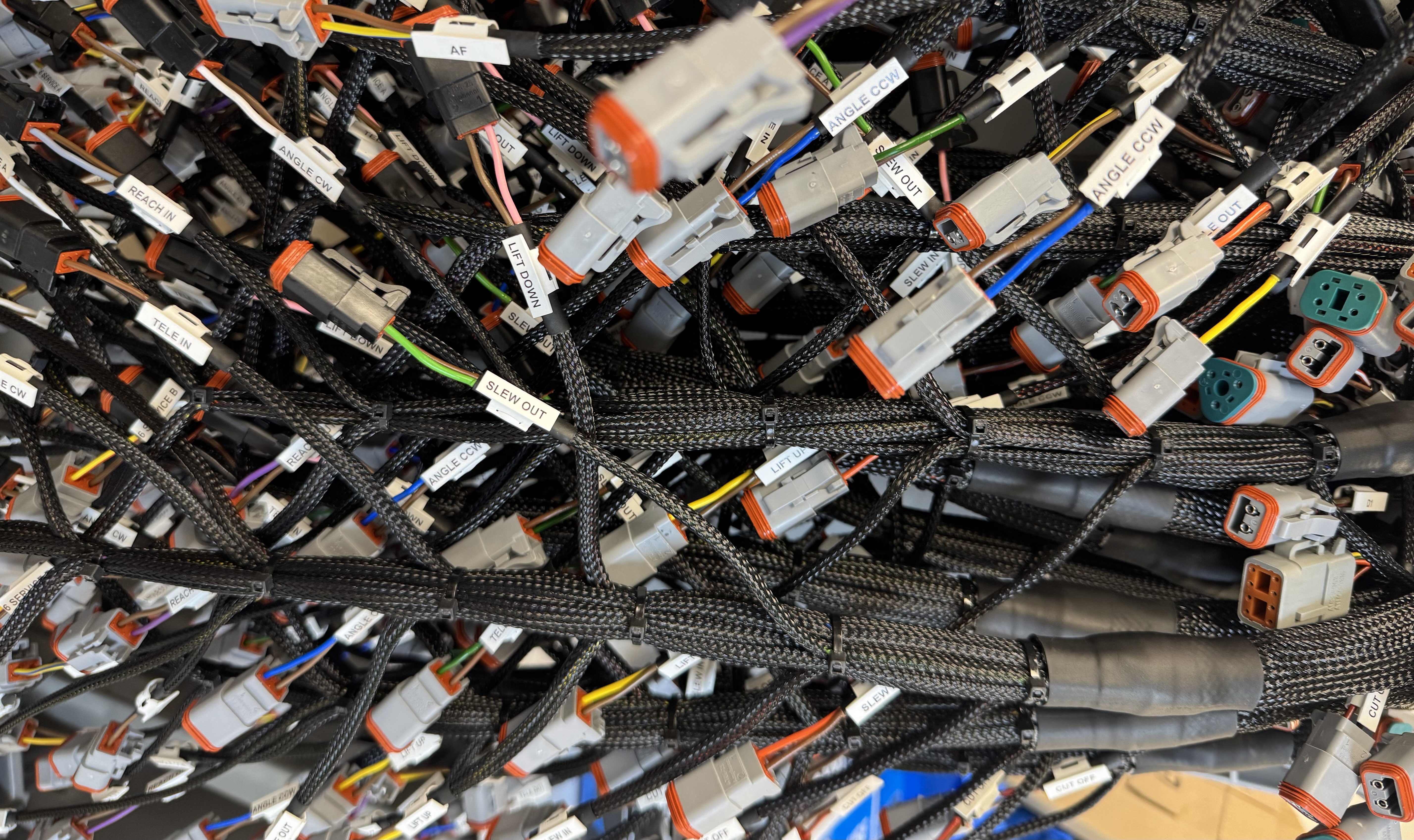
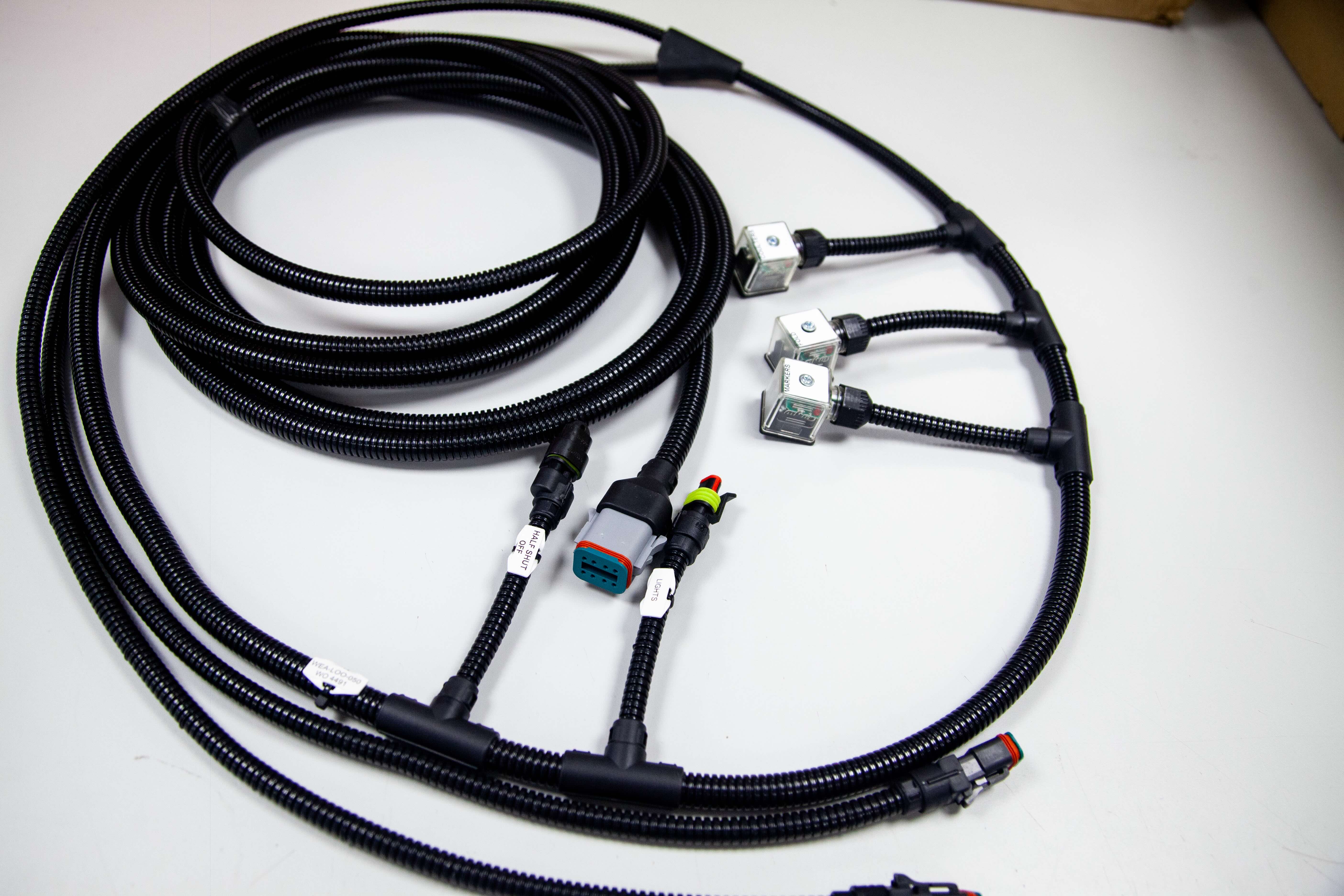
Reliability is set at the harness level. Pre-engineered wire harnesses and cable assemblies built to recognized workmanship standards, with ferrules, labeled conductors, and strain relief, reduce loose strands, torque-related loosening, and mis-terminations. Continuity and insulation testing of harnesses before panel integration eliminates latent faults early, while consistent connectorization enables quick, mistake-proof mating during assembly and field service. Clear CAD wire routing, conductor IDs that match schematics, and bill of materials traceability simplify troubleshooting and change management. These practices improve airflow, ease heat management, and support consistent panel impedance paths, all of which stabilize performance under load.
Production consistency and product reliability
Turnkey providers apply document control and change management so every release reflects the latest approved revision of schematics, CAD layouts, and panel schedules. That discipline, combined with controlled torque specs and labeled terminations, drives repeatability across builds and sites. Pre-shipment powered testing and verification checklists reduce field nonconformances and downtime. As the market for OEM panels grows toward USD 8 billion by 2026, dedicated high-volume build cells and capacity planning ensure deadlines are met without quality compromise. The result is fewer line stops, faster root cause analysis, and longer intervals between service events.
Case example and why Tec-Stop
In one enclosure program, precision cutout fabrication and pre-terminated harnesses cut modification time by 75 percent, enabling faster turn and consistent fit across runs. Tec-Stop applies the same principles at scale. We deliver precise wiring solutions and control panel assemblies with revision-controlled documentation, UL 508A compliant builds, labeled conductors, ferruled terminations, and recorded FAT results. Our focus is practical engineering detail, predictable lead times, and clear communication from quote through delivery. For OEMs standardizing a product family or ramping a high-volume line, a Tec-Stop turnkey package consolidates design intent, assembly quality, and verification into one accountable workflow, supported by single-source responsibility and repeatable outcomes.
High-Volume Production: Meeting Modern Demands
Scaling demand for automation controls OEM panels
High-volume production is now a strategic requirement as market demand accelerates. Globally, electric control panels are projected to grow from 6.0 billion dollars in 2022 to 10.3 billion dollars by 2032, a 5.8 percent CAGR, driven by factory automation, renewable integration, and rising power quality needs Allied Market Research. In North America, the market is expected to reach 2.8 billion dollars by 2033 at a 5.9 percent CAGR as OEMs standardize designs and expand connected equipment portfolios Sustainable Energy Times. This scale requires dedicated production cells, repeatable work instructions, and disciplined material flow to keep takt times predictable. For Tec-Stop, the focus is on repeatable wiring solutions, clear documentation, and assemblies that ship ready to integrate.
Mixed model production for simultaneous multi-product manufacturing
Simultaneous multi-product manufacturing, often called mixed model production, increases throughput by sequencing families of control panel assemblies with shared components and processes. When changeovers fall under five minutes through modular fixtures and common backplates, utilization improves and labor variance drops. Mixed model lines reduce waste by kitting standardized harnesses, terminal blocks, and labeling sets, then pulling only variant-specific items late in the build. The approach also improves responsiveness to demand swings without reconfiguring entire lines Mixed Model Production overview. Practical actions include heijunka-style scheduling, common cutout libraries, and visual Poka Yoke for terminal marking to keep quality steady at speed.
Semiconductor scarcity and practical mitigation
Semiconductor constraints continue to affect PLCs, HMIs, drives, and power supplies, which can stall otherwise complete builds. Effective mitigation starts with an approved vendor list containing prequalified alternates, footprint-agnostic DIN rail layouts, and configurable I/O harnesses that accept multiple controller families. Early material reservation tied to a rolling 12-month forecast stabilizes lead times, while first-article qualification for alternates prevents late-stage surprises. Design for substitution, for example dual punch patterns for operator interfaces and universal cutouts for power supplies, helps preserve schedules and prevents rework.
Industry 4.0 techniques that remove bottlenecks
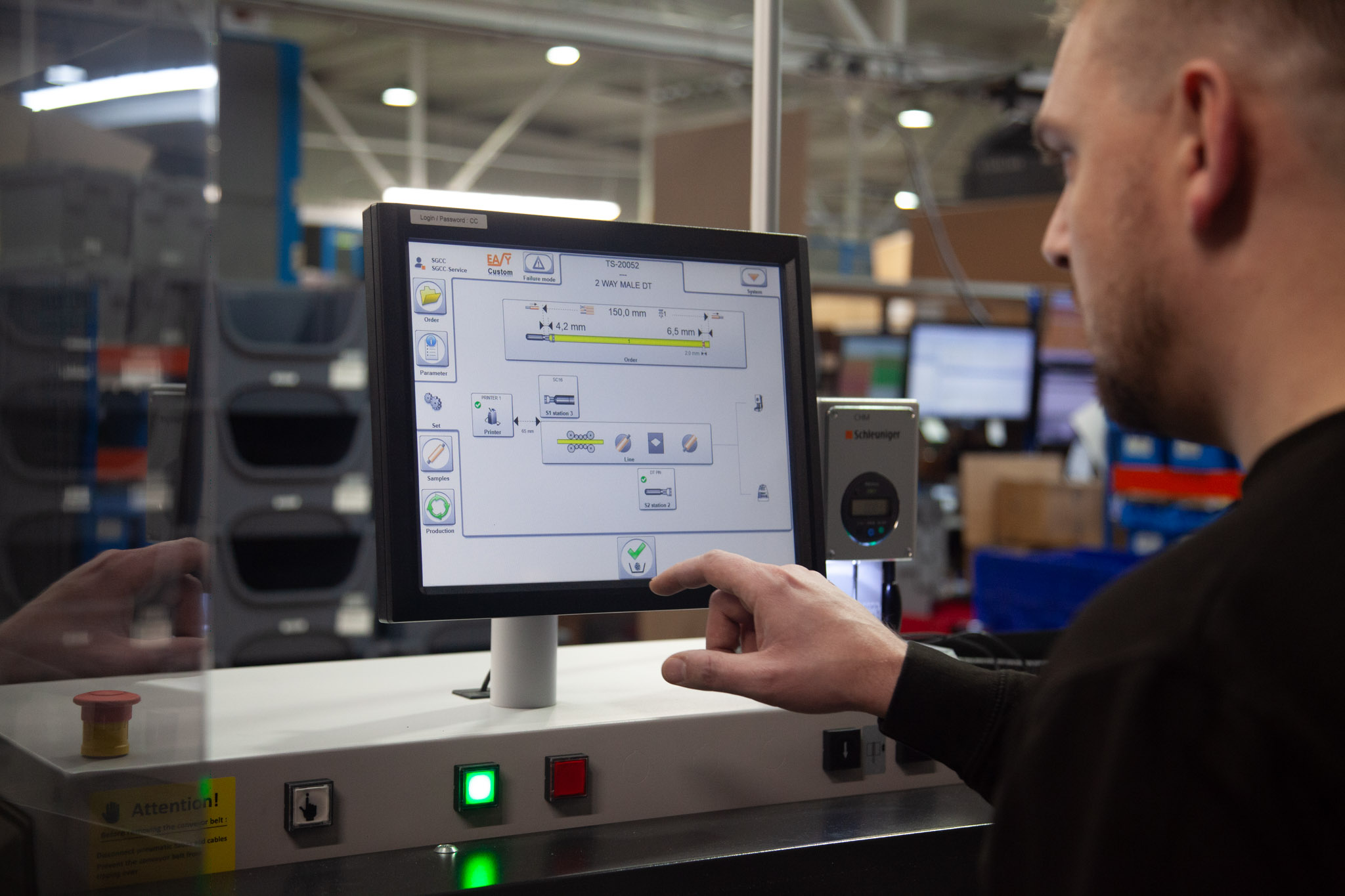
Industry 4.0 tools close gaps between planning and execution. Digital travelers with barcode traceability link each assembly to torque data, crimp pull-test results, and point-to-point continuity logs, improving root cause analysis and yield. IoT monitoring on torque drivers and crimpers enables predictive maintenance, reducing unplanned downtime. CNC enclosure machining and standardized panel drilling templates cut modification time significantly, with precision methods shown to reduce enclosure modification by up to 75 percent in practice. Real-time eKanban and supplier portals align replenishment to takt, lowering expedites and shortages.
Tec-Stop’s model for efficient high-volume outputs
Tec-Stop runs dedicated high-volume cells with mirrored fixtures, standardized work, and line balancing to a defined takt. We integrate CAD-to-manufacturing workflows, including native harness drawings, clear wiring diagrams, and revision-controlled build packets, so every connection matches the latest spec. Quality is baked in, using ferrules, labeled terminations, and documented inspections that align to UL 508A shop practices. Functional testing combines point-to-point verification, hipot where required, and emulator-based checks for I/O blocks to validate assemblies before shipment. The result is dependable throughput, smooth communication, and automation controls OEM panels delivered on schedule with consistent build quality.
Advanced Control Strategies for Enhanced Operations
Decentralized control that reduces risk and footprint
For automation controls OEM panels, moving I/O, drives, and valve terminals closer to the machine reduces cabinet density, cable runs, and single points of failure. Distributed architectures using deterministic fieldbuses such as EtherCAT or PROFINET shorten analog and encoder paths, which lowers noise susceptibility and improves diagnostics at the point of use. In practice, cabinet footprint drops when field-mounted blocks take on local functions, and enclosure thermal loads decline because fewer high-dissipation devices sit in the main panel. Real-world guidance highlights that decentralized designs can materially shrink control cabinets and streamline expansion, as seen in references on reducing control cabinet size through decentralized automation and on choosing decentralized vs centralized controls in conveyor applications. For OEMs balancing throughput and uptime, this approach also improves maintainability, since technicians can isolate and service a cell without disturbing the primary enclosure. Tec-Stop designs maintain compliance constraints while distributing control intelligently, so reliability gains do not compromise certification pathways.
Low installed-cost wire management that compounds savings
Installed cost is driven by hours, copper, and rework. Tec-Stop specifies trunk-and-drop topologies, pre-terminated harnesses, and standardized color codes with ferrules and printed markers to accelerate pull and termination. Precision enclosure preparation and panel layout, including slotted duct sizing and multi-connector blocks, reduces drilling time and shortens routing paths. Industry reports show enclosure modification time can be reduced by up to 75 percent through precision fabrication, which cascades into faster commissioning and fewer field changes. In our builds, these measures commonly cut installed hours by 15 to 30 percent and reduce copper usage by double digits, while clear labeling and CAD-aligned wire lists decrease troubleshooting time during FAT and SAT.
Device-agnostic interfaces that protect design flexibility
Device-agnostic interfaces, for example IO-Link at the sensor layer and protocol-bridged remote I/O, let OEMs mix components without vendor lock-in. Unified parameterization, consistent tag naming, and structured data models simplify PLC integration and HMI diagnostics. When paired with OPC UA or MQTT at the edge, assemblies expose condition data for analytics without rewriting core logic. This strategy accelerates replacement cycles, shortens spares inventories, and supports predictive maintenance by elevating device metadata, such as cycle counts and quality bits, into historian streams.
Smart strategies proven in Tec-Stop implementations
With the OEM control panel market projected to reach roughly USD 8 billion by 2026, disciplined upgrades must show measurable ROI. On a recent packaging line, Tec-Stop deployed distributed I/O and point-of-use valve manifolds, trimming enclosure area by 28 percent, copper length by 24 percent, and installation hours by 18 percent. For a material handling assembly, device-agnostic I/O with structured diagnostics enabled hot-swap sensor replacement in under 5 minutes, improving mean time to repair by about 20 percent. Across both projects, our wiring solutions used ferruled terminations, serialized wire IDs, and revision-controlled schematics, which stabilized quality and simplified change management. These strategies position OEMs to scale efficiently, then layer in analytics and energy optimization as production demands evolve.
Best Practices in Wiring Technologies
Clear numbering and labeling
In automation controls OEM panels, clear numbering and labeling are the fastest route to reliable maintenance and safe operation. A disciplined device tag schema that ties every conductor ID to the schematic symbol and terminal number shortens diagnostics, lowers human error risk, and supports OSHA-oriented hazard awareness. Use durable, heat-shrink or polyester labels rated for the enclosure environment, and mark both ends of every wire, including jumpers and field terminations. Pair terminal markers with panel schedules that reference drawing zones, so technicians can move from print to point in seconds. Adding scannable IDs that map to the bill of materials, torque specs, and test results further reduces troubleshooting time during startup and service.
Emerging wiring technologies and cost savings
Digital wire processing, driven by CAD-to-cut lists, is reducing manual labor by large margins, with reported assembly time cuts up to 80 percent when applied to high pin-count builds. Precision enclosure fabrication, including CNC back panel drilling and cutouts, has trimmed modification time by about 75 percent, which pulls wiring earlier in the schedule and reduces rework. Materials are evolving as well, with surface-engineered copper conductors showing conductivity gains on the order of 3 percent, enabling gauge optimization within UL 508A conductor sizing rules. Smart power distribution and I/O modularization continue to reduce copper content and panel density, simplifying routing and lowering heat load. For OEMs scaling product families, standardized harness kits and pre-terminated assemblies reduce touch labor and variability across repeat builds. These gains align with a market expanding from roughly 5.2 to 8 billion USD between 2024 and 2026, rewarding platforms that lock in repeatable wiring strategies.
Methods to enhance safety and efficiency
Safety begins with UL 508A compliant design choices, correct short-circuit ratings, and documented creepage and clearance. Use ferrules on all stranded conductors landing in cage clamps, verify strip lengths, and record torque values on lugs and bus connections. Apply consistent color coding per governing standards, segregate power and control in separate wireways, and maintain bend radius and fill limits to preserve conductor life. Specify wire classes, insulation ratings, and overcurrent protection to match actual load and ambient conditions, then validate with thermal scans during factory acceptance testing. Enforce document control, engineering change management, and 100 percent point-to-point continuity checks with signed test records. Include spare cores and labeled future terminals to support field upgrades without panel rework.
Real-world application in OEM panels and Tec-Stop’s contributions
Across packaging, filtration, and motion platforms, standardized labels tied to CAD zones have cut commissioning loops and simplified changeovers, while modular terminal blocks and prewired subassemblies keep cabinets clean and serviceable. High-volume programs benefit from dedicated wiring benches, fixture-based harness layups, and serialized test documentation, which raise throughput without sacrificing traceability. In retrofit work, precision back panel fabrication and digital wire lists have minimized downtime windows by moving wiring tasks off critical path. Tec-Stop brings this discipline to each build, using CAD-driven wire lists, consistent numbering conventions, and ferruled terminations as standard practice. Assemblies are verified with continuity, polarity, and functional checks under load, and each unit ships with a clean markup set and revision-controlled test report. Our wiring solutions focus on clarity, repeatability, and communication, giving OEMs confidence that every connection in their automation controls OEM panels is dependable and ready for production.
Conclusion: Mastering OEM Control Panel Production
Standardized control panel designs, documented wiring solutions, and UL 508A compliance now anchor dependable automation controls OEM panels. OEMs that template enclosure layouts and use precision cutouts routinely reduce enclosure modification time by up to 75 percent, which compresses lead time and improves repeatability. Practical steps for Industry 4.0 include specifying Ethernet-capable I/O, defining a common tag schema, reserving backpanel space and 24 VDC budget for an edge gateway, and segmenting controls and IIoT networks. Close the loop with versioned CAD, formal change control, and test plans that simulate I/O and validate data quality.
The outlook is strong, with the OEM control panel market projected to grow from about USD 5.2 billion in 2024 to roughly USD 8.0 billion by 2026, driving demand for capacity and consistent QA. Expect more modular subassemblies, digital work instructions, and high-volume builds that require dedicated shop space and documented torque and continuity checks. Selecting a reliable partner matters; Tec-Stop emphasizes precise assemblies, clear communication, and traceable materials so every connection is dependable. Move forward by piloting standardized templates on one product family, training technicians on ferrules and torque tools, scheduling periodic drawing reviews, and tracking first-pass yield to sustain gains.