A single weak crimp can stall a product launch. For OEM wiring solutions, the real challenge is not building one perfect harness, it is delivering consistent quality across thousands of units, multiple facilities, and harsh operating environments. This introduction frames a practical analysis of how to make that consistency repeatable, auditable, and scalable.
We will examine the pillars that matter most: translating design intent into unambiguous specifications, qualifying suppliers, validating processes, and enforcing in-line and end-of-line testing with real limits. You will see how standards like IPC/WHMA-A-620 and IATF 16949 connect to everyday checkpoints, from crimp height and pull force to continuity, hipot, and labeling. We will link control plans to statistical control, traceability, and disciplined change management, so deviations are detected early and contained.
By the end, you will know which KPIs to track, including first-pass yield, PPM, and capability indices; how to define critical-to-quality characteristics; and how to balance automation with flexibility. Most importantly, you will have a roadmap for ensuring repeatable performance at scale, without surprises in cost, lead time, or reliability.
Background and Current Challenges in OEM Wiring
Market pressures on OEM profitability
Automotive OEMs enter 2026 with thinner buffers. Operating margins fell to about 5.4 percent in Q1 2025, more than 40 percent below the 2021 peak, as inflation, higher rates, and uneven EV demand weighed on results operating margins fell to about 5.4 percent. Tariff volatility adds cost and delay, with a late 2025 survey showing 87 percent of manufacturers affected and nearly half reporting component price increases of 11 to 20 percent tariff pressures squeeze manufacturers’ bottom line. AI-driven demand is pulling wafer capacity from automotive-grade memory, while copper and aluminum trend higher, pushing bills of material up AI demand shifts wafer capacity and raises input costs. Meanwhile, electrification and data-rich automation increase wiring density and software content per model. Profitability now depends on eliminating rework, compressing takt time, and proving consistent quality at scale.
Why reliable wiring solutions matter now
Reliable wiring solutions anchor performance, safety, and throughput as complexity rises. Harnesses must carry higher currents for electrified powertrains, route low-noise, high-speed data for ADAS, and maintain shielding integrity. Precision in cut length, crimp height, and pull force, supported by automation and precision tooling, reduces variation and line stoppages. 100 percent continuity and hipot testing, targeted functional fixtures, and serialized traceability protect yield and speed root-cause analysis. For high-volume programs, modular harness families and standard connector pinouts meet interconnect needs without excessive cost escalation, sustaining consistent quality while preserving margins.
Common quality concerns and customer impact
Recurring risks include intermittent opens from poor crimps, connector backouts from low retention force, insulation chafing at hard edges, and thermal derating errors that raise resistance under load. In the field these manifest as warning lights, ADAS faults, or charging interruptions, which erode trust and can trigger recalls. Practical mitigations include controlled bend radii and strain relief, abrasion sleeves and grommets at pass-throughs, documented torque and insertion checks, and design-for-test points at critical nodes. Closed-loop SPC on crimp monitors, first-article validation, and end-of-line functional testing shorten feedback loops and lift customer satisfaction. In the next section, we translate these pressures into a wiring quality playbook across design, manufacturing, and validation.
Importance of Statistical Process Control (SPC)
The role of SPC in maintaining consistent quality
SPC gives OEM wiring programs a practical method to hold variation in check from first article onward. Teams chart critical to quality characteristics, such as crimp height, pull force, strip length, torque, continuity, and hipot. With Xbar R, I MR, and p charts, engineers see drift early and intervene before specifications are breached. Capability analysis, Cp and Cpk, validates tooling and fixtures during qualification, anchoring repeatability across lots, shifts, and build cells. For fundamentals and control chart guidance, see Statistical Process Control fundamentals for practitioners today.
How SPC mitigates quality inconsistencies
SPC separates common causes from special causes, then links each category to a clear, local reaction plan. Example, a pneumatic crimper trends upward in crimp height within limits; the signal triggers calibration before nonconforming terminations accumulate. The same approach catches torque drift on busbar fasteners or gradual increases in continuity failures from worn test probes. Pairing control charts with gage R and R, first pass yield, and lot traceability builds a closed loop that stabilizes output. This supports high volume objectives, consistent quality without cost escalation, highlighted across electronics and interconnect production.
Current trends in OEM adoption
OEMs are enhancing SPC with machine learning for anomaly detection, predictive alerts, and role based dashboards that push actionable signals to operators. These hybrid strategies combine real time control and transparency from SPC with pattern recognition from AI, improving prevention over inspection. For context on quality technology trajectories, see Trends and predictions in quality in 2026 and methods. Rising harness complexity from electrification and data rich automation, and tighter timing requirements from AI infrastructure, make statistically stable processes non negotiable. At Tec-Stop, we integrate SPC with precision tooling, automated testing, and clear communication, giving OEMs confidence in wiring solutions and assemblies at scale.
AI and Machine Learning in Enhancing Production Quality
Real-time monitoring for consistent quality
AI gives wiring solutions and control panel assemblies a continuous feedback loop that stabilizes output. Computer vision can verify crimp height, bellmouth formation, insulation position, heat-shrink placement, and part markings in-line, so nonconformities are contained at the station rather than at final test. Modern systems correlate images with sensor streams like cycle time, insertion force, and continuity measurements to flag drift before it turns into scrap. In practice, AI visual inspection can reach near perfect detection accuracy, which helps teams sustain consistent quality at volume. For a deeper look at vision-guided monitoring, see this overview of AI-based production monitoring, and the broader role of anomaly detection in smart factories described here, key trends in IIoT, AI and AI vision.
Predictive models that prevent defects
Machine learning moves quality from detection to prevention. Models trained on historical process data, including crimp force signatures, torque curves, ambient humidity, lot codes, and operator inputs, can predict the probability of a defect before a unit leaves the station. Gaussian Process methods are particularly effective for continuous manufacturing, where they forecast quality outcomes from process parameters and enable early adjustments that reduce rework and downtime, see predicting product quality with Gaussian Processes. When combined with condition-based monitoring, predictive approaches also reduce unplanned downtime and extend tool life, which stabilizes output and supports consistent quality. For practical adoption, start by defining CTQs, map available data to each CTQ, and pilot a supervised model that gates release decisions with clear, explainable thresholds.
Proven applications in wiring and panel assemblies
Quality teams are already applying AI where it matters most. On harness boards, vision tools compare each build to a golden layout, catching pin-outs, tie routing, and label errors in seconds, which reduces dependance on end-of-line functional test. In control panel assemblies, learning from torque signatures and thermal images identifies loose terminations and under-torqued lugs that can pass basic checks but fail in service. During kitting, classifiers verify connector families and wire gauges to prevent wrong-part introductions that cascade downstream. The most effective programs couple AI with SPC, using model alerts to trigger containment, layered process audits, and targeted retraining. Instrument critical stations, standardize image capture and part serialization, and integrate decisions into your MES, then close the loop by validating model calls against pull tests and continuity benches to build confidence in every connection.
Material Quality: Impact on Consistency and Reliability
Copper purity drives predictable performance
Copper conductivity sets the floor for stable voltage, thermal behavior, and signal integrity. High-purity copper, particularly oxygen-free grades, measures about 101 to 102 percent IACS conductivity compared with 98 to 100 percent for standard grades, which reduces resistive losses and heat rise across long runs and dense harness bundles. In practice, lower resistance tightens voltage margins for AI racks, EV power distribution, and motion-control I/O where timing and noise budgets are narrow. Some reports note efficiency improvements up to double digits when higher conductivity conductors are used in power networks, a useful reminder that conductor quality compounds across an assembly’s length and load profile Oxygen-free copper overview. With electrification and data-center growth, global copper demand is projected to rise from 28.3 million metric tons in 2025 to 42.4 million by 2040, while mined output may peak near 25.8 million by 2030, then decline, which elevates the importance of efficient utilization and recycling AI-era copper outlook.
Insulation performance underwrites reliability
Insulation prevents unintended current paths, limits leakage, and controls heat and mechanical wear in service environments. Material choice must match stressors such as temperature, vibration, oils, ozone, and UV, since dielectric breakdown accelerates when these factors interact. High-quality insulation maintains dielectric strength and volume resistivity over life, reducing short-circuit and tracking risk and stabilizing signal fidelity in data-rich automation Why insulation matters. Practical specifications include selecting XLPE or irradiated PVC rated to 125 C for engine-bay harnesses, or fluoropolymer jackets where chemicals are present. For verification, teams can require insulation resistance above 100 megaohms after thermal cycling, dielectric withstand at 150 percent of rated voltage, and abrasion testing aligned to bend radius and clamp design.
Tec-Stop’s material standards
Tec-Stop sources high-purity copper and validates lots with spectroanalysis and micro-ohm resistance sampling to keep conductor variability low across builds. We match insulation compounds to application thermal classes and fluids, then confirm properties with incoming durometer, dimensional checks, and dielectric tests. Assemblies undergo accelerated aging and thermal shock to confirm stable insulation resistance and minimal elongation change, which supports consistent quality in production and field use. Supplier audits, full lot traceability, and material certificates tie each assembly to verified inputs. We also segregate copper scrap by alloy, reclaim it through vetted recyclers, and redeploy verified feedstock, reducing exposure to supply fluctuations while supporting dependable delivery.
Interdisciplinary Collaboration for Quality Improvement
Cross-functional collaboration inside the build
Quality improves when design engineering, manufacturing engineering, test, supply chain, and quality control work from one shared plan. In wiring solutions and control panel assemblies, a cross-functional design for manufacturability review aligns connector selection, wire gauges, bend radii, and test points with measurable critical-to-quality targets. As AI infrastructure increases reliance on precise timing, teams agree early on propagation delay and skew budgets for high-speed pairs, then lock length tolerances and impedance checks into the control plan. Practical steps include a CTQ matrix tied to drawing callouts, first-article build events with gage R and R on crimp height and pull force, and a single change log that cascades updates to work instructions within 24 hours. These routines reduce late rework and yield steadier first-pass yield across builds.
Supplier partnerships that protect consistency
Close supplier collaboration turns material variability into predictable inputs. Joint incoming inspection criteria for copper purity, terminal plating thickness, and insulation diameter stabilize crimp performance and dielectric clearances. Early supplier involvement on connector families and test adapters often removes cost without eroding consistent quality, which is critical as high-volume electronics demand reliable interconnects without excessive cost escalation. Co-developed golden samples, dock-to-stock for statistically capable parts, and shared failure analysis shorten feedback cycles and keep assemblies compliant as standards evolve in automotive, aerospace, and smart-building Ethernet. With the wiring market growing and complexity rising from electrification and data-rich automation, these partnerships give OEMs scalable reliability rather than ad hoc fixes.
Communication practices that make quality repeatable
Consistent quality rests on transparent, routine communication. Weekly build readiness reviews use the same dashboards for first-pass yield, ppm defects, on-time delivery, and capability indices, so teams see the same signals and act quickly. Structured meeting cadence improves team function in other sectors as well, as shown in a multicentric study on interprofessional collaboration that reported sustained gains over two years. In practice, clear acceptance classes, visual standards, and digital PPAP packages reduce ambiguity, while supplier portals mirror our revision control and provide traceable lot data. The result is fewer escapes, faster containment when variation appears, and a smoother path from prototype to steady production.
Tec-Stop Wiring: The OEM Partner for Consistent Quality
Reliability engineered into every assembly
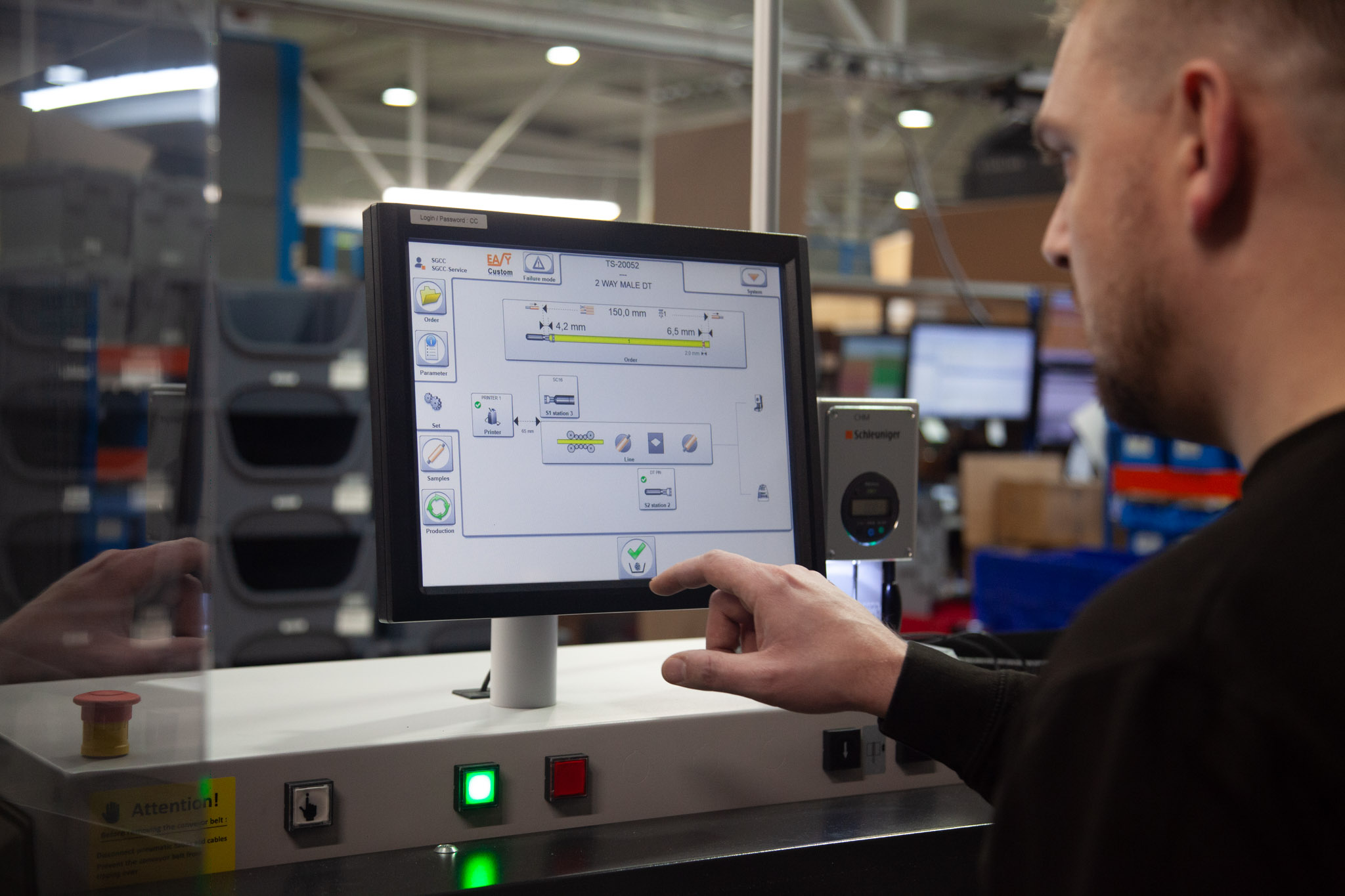
Electrification and data-rich automation are raising harness complexity, so OEMs place a premium on consistent quality. Tec-Stop designs wiring solutions to the application, selecting conductor size, insulation, shielding, and connector families that match environment and duty cycle. Assemblies are built on verified harness boards with controlled cut and strip tolerances, length matching for timing-critical pairs, and documented torque and crimp controls. Every lot runs through 100 percent continuity checks, hipot when risk class requires it, pull-force sampling, and functional test, with serialized records linked to part numbers. Control panel assemblies receive the same documented coverage and labeling for safe installation. Compliance with RoHS, UL, and MIL-SPEC requirements, where applicable, adds assurance for safety and reliability. Precision tooling and targeted automation strengthen repeatability as volumes rise, aligning with 2026 market shifts that emphasize advanced testing and precision manufacturing.
Communication and support built for OEM timelines
Communication is part of the quality plan. OEMs receive a structured kickoff, including DFM review, acceptance criteria, color code matrix, and a first-article approval that locks the build standard. During production, single-point coordination provides weekly status, revision control, and clear handling of ECR and ECN. Post-delivery, Tec-Stop supports installation, troubleshooting, and field modifications so your teams stay on schedule. This approach aligns with market demands for interconnects that hold quality without unnecessary cost increases, leveraging lean fixture design and modular subassemblies to scale. As AI infrastructure raises reliance on precise timing, proactive updates on length control and shielding choices keep critical paths stable.
Results OEMs can measure
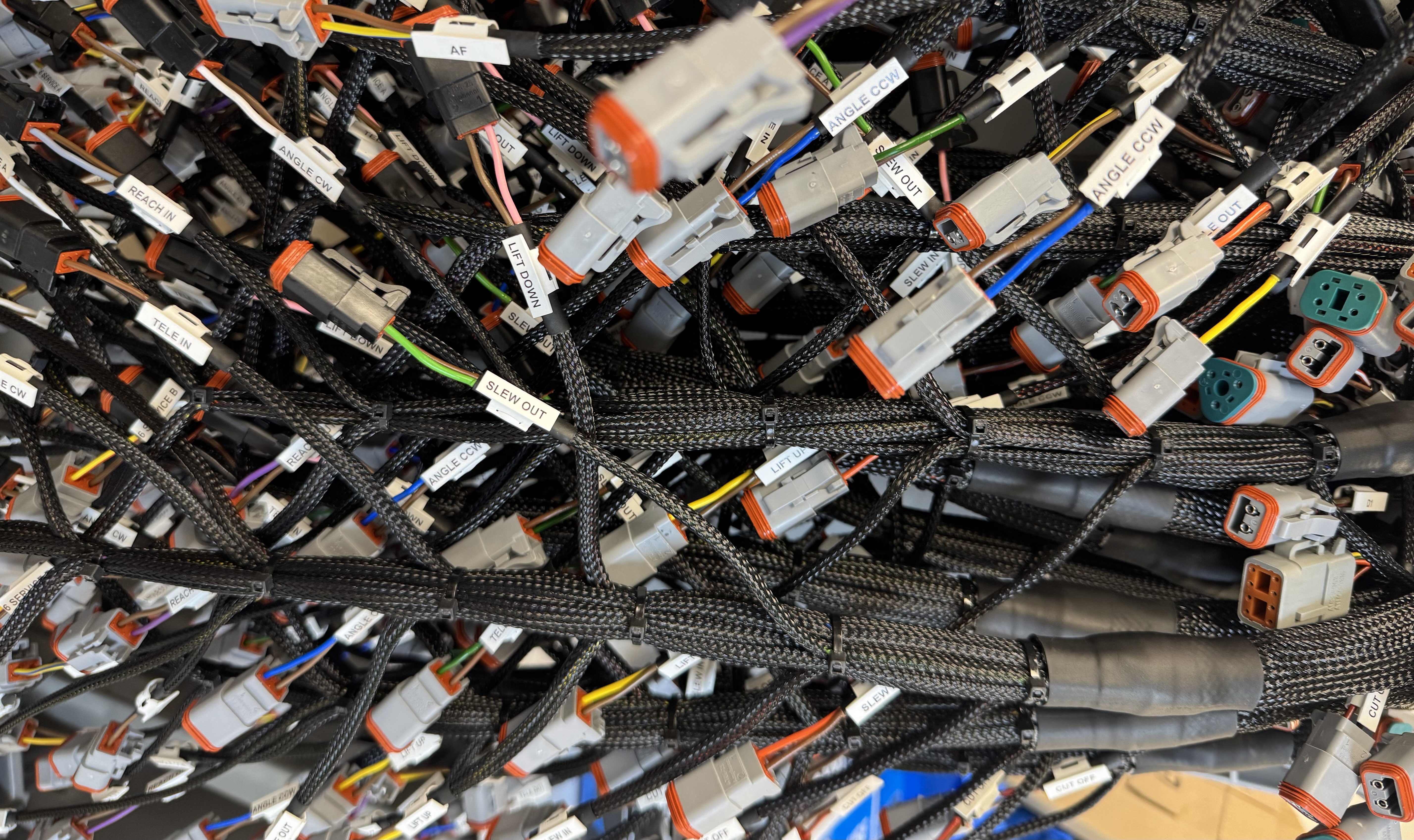
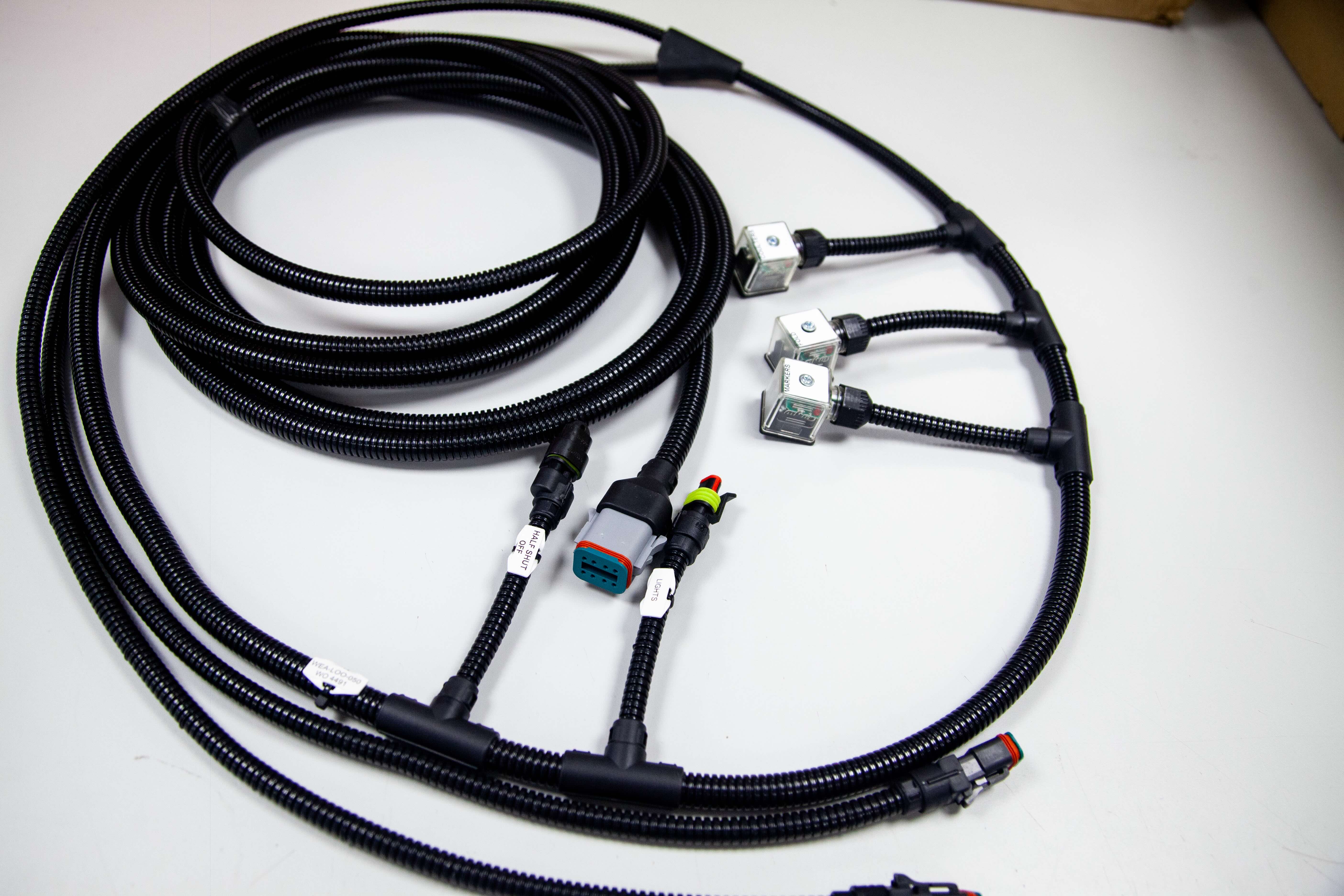
Results reflect this method. A recent collaboration delivered the complete wiring for the Hooka Mobile Crane from Hook-Up Solutions, integrating compact routing, labeled breakouts, and vibration-ready terminations suited to tight-space handling. The assemblies arrived continuity-tested and function-verified, which reduced on-vehicle debug and supported a safe commissioning window. Across transportation, medical, HVAC, and industrial automation, partners cite dependable builds, smoother launches, and fewer line-side surprises. In a global wiring market focused on quality and safety-compliant solutions, Tec-Stop provides consistent quality by pairing rigorous test coverage with clear communication, so OEMs gain confidence in every connection and a practical path to scale.
Conclusion: Path to Consistent Quality and Reliability
Consistent quality is now the strongest lever OEMs have to absorb rising harness complexity from electrification and data-rich automation. The global wiring market is expanding around safety-compliant solutions, and high-volume electronics programs expect repeatable interconnects without cost spikes. In practice, a small shift in crimp height or a few milliohms added to a ground path can propagate into heat, signal latency, or timing jitter that undermines AI workloads that depend on precise synchronization. With modern automation, precision tooling, and improved test coverage, holding tight tolerances has become practical at scale. Consistent quality turns into fewer escapes, smoother audits, and predictable launches across vehicles, smart buildings, and industrial equipment.
Start by defining critical-to-quality parameters, then set capability targets such as Cpk 1.33 for crimp height and pull force on safety-critical joints. Design for test with points, 100 percent continuity, hipot where required, and functional checks at load. Standardize materials by specifying copper purity and approved connector families, and enable traceability from lot to torque value. Layer SPC with real-time vision and electrical test data so engineers correct drift before defects ship. Tec-Stop supports this path with clear communication, proven fixtures, and scalable wiring solutions and assemblies that give OEMs confidence in every connection.