When a production line stalls or a near miss occurs, the root cause often resides inside the panel. Control assemblies sit at the intersection of power distribution, logic, and functional safety, and their design choices determine whether a system runs reliably or drifts toward downtime and risk. For intermediate practitioners, mastering these assemblies is less about parts lists and more about engineering intent, from signal integrity and thermal limits to diagnostic coverage and fail-safe behavior.
This analysis will show how to architect control assemblies for safety and throughput together. You will learn how to partition safety and standard control circuits, select components with appropriate ratings and failure data, and apply relevant standards such as IEC 60204-1 and NFPA 79. We will evaluate common topologies for PLCs, safety relays, interlocks, and redundancy; address grounding, noise immunity, and wiring practices; and assess enclosure ratings and thermal management. Finally, we will outline commissioning and validation methods, including test protocols, proof testing intervals, and maintainability metrics, so you can quantify performance and sustain compliance over the system lifecycle.
The Evolution of Control Assemblies
From relay logic to integrated assemblies
Control assemblies have progressed from relay banks and manual panels to programmable, networked builds that support high availability. Early industrial robotics, such as Unimate in the 1960s, catalyzed electronic control adoption and set the stage for PLC-based architectures, documented in Modern Industrial Robotics. Through the 1980s and 1990s, PLCs and distributed control architectures standardized I/O, improved diagnostics, and enabled modular panelization. In parallel, proven wiring methods matured, including ferrules, clear numbering, and wire ducts, which reduce troubleshooting time and mis-termination risk. Today, disciplined cable management, including optimized lengths and bend radius compliance, remains a core driver of reliability and mean time between failure in production environments.
Automation, data, and edge intelligence
Automation now extends beyond deterministic control to include condition monitoring and analytics. IIoT connectivity and AI-enabled algorithms can cut unplanned downtime by up to 50 percent through predictive maintenance, as summarized in Circuit Design for Predictive Maintenance. Practical panel implications include allocating DIN space and power budget for edge compute, segregating power and signal paths, and providing shield terminations for high-speed industrial Ethernet. AI-driven quality control is also reshaping inspection of populated panels and harnesses, reducing rework and cost while raising first-pass yield. Actionable steps include designing test points into assemblies, specifying labeled test harnesses, and reserving spare I/O for future diagnostics.
Compliance and Industry 4.0 momentum
Evolving standards continue to shape design decisions. ISO 13849 and IEC 62061 are prompting certified safety architectures, documented by MarketsandMarkets’ overview of factory automation trends, see Industrial Control and Factory Automation trends. Interoperability is advancing through open information models and modular packaging concepts, which favor configurable assemblies and reduce integration effort. On the factory floor, modular and configurable manufacturing lines are becoming the norm, supporting high mix and low volumes with consistent quality. Related shifts, such as software-defined vehicles driving a reported 50 percent reduction in harness wiring content, reinforce the move to pluggable interfaces, coded connectors, and QR-coded labels. For OEMs, planning for digital twins, sensor-rich panels, and clear documentation builds traceability, eases audits, and positions assemblies for smart factory rollouts in 2025 and beyond.
Key Elements of Safe and Reliable Control Assemblies
Code adherence sets the baseline
Safe control assemblies start with compliance. The National Electrical Code defines fundamentals for conductor sizing, overcurrent protection, grounding and bonding, and enclosure ratings in the U.S., and it is revised on a three‑year cadence. For machinery, IEC 60204-1 details requirements for protection, functional grounding, clearances, and markings that ease inspection and global shipment. Utilities feeding plants follow the National Electrical Safety Code, which influences upstream protection and labeling. Aligning a build of materials and drawings to these codes avoids overheating, nuisance trips, and costly rework, and it gives OEMs straightforward conformity evidence.
Material choices drive longevity and safety
Material selection should reflect environment, load profile, and maintenance needs. Mild steel enclosures balance cost and rigidity, stainless steel resists washdown and chloride exposure, and aluminum reduces weight while providing inherent EMI shielding. For conductors, MTW or AWM styles improve flexibility inside ducts, and PTFE or silicone insulation withstands elevated temperature or chemical exposure. Shielded cable around drives and high di/dt devices limits EMI coupling, improving sensor stability. Use ferrules on stranded leads and appropriately rated terminal blocks to maintain consistent contact resistance and torque integrity.
Wire management protects performance and serviceability
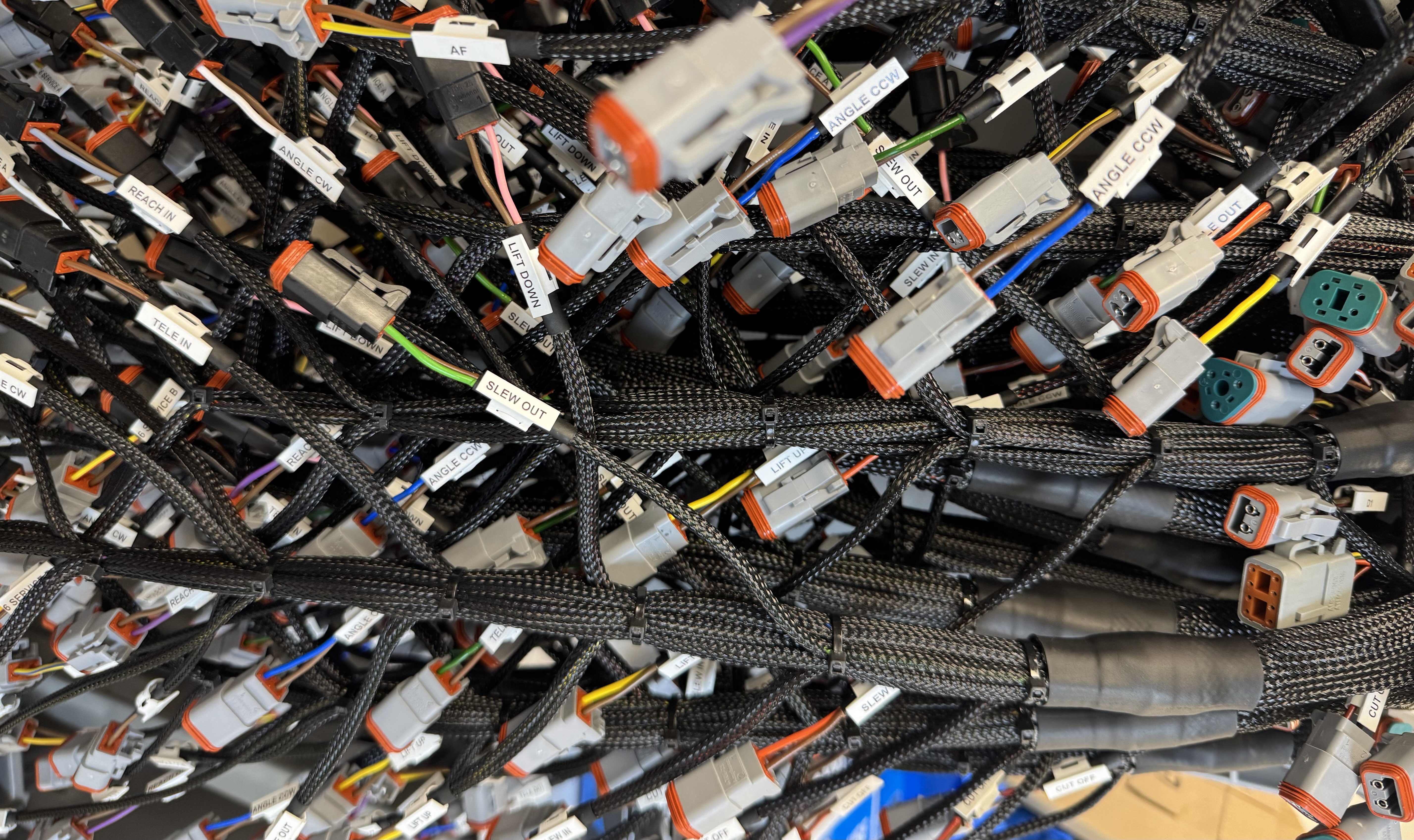
Structured wire management reduces faults and speeds diagnostics. Route power and control in separate ducts, keep analog and high frequency switching paths apart, and respect manufacturer bend radius to prevent insulation creep and conductor fatigue. Cut conductors to length, avoid tight service loops, and secure with strain relief near terminations. Numbered sleeves, engraved device tags, and panel legends create a single source of truth. These practices pair well with modular manufacturing lines and AI-driven inspection, which are lowering defect escape rates and cost in electronics production.
Size, type, space, routing, and labeling work together
Correct gauge and wire type, sized for ampacity and ambient temperature, prevent hot spots and unwanted derating. Space planning matters, including free air around heat sources, adequate gutter capacity, and reachable clearances for torque checks and future additions. Clean routing reduces crosstalk and simplifies lockout/tagout during service. Clear, consistent labeling across wires, devices, and I/O maps supports predictive maintenance and IoT diagnostics. As software-defined designs trim unnecessary conductors and Industry 4.0 drives data visibility, disciplined selection and documentation give manufacturers confidence in every connection.
Advancements in Wire Harness Technology
Automation elevates throughput and consistency
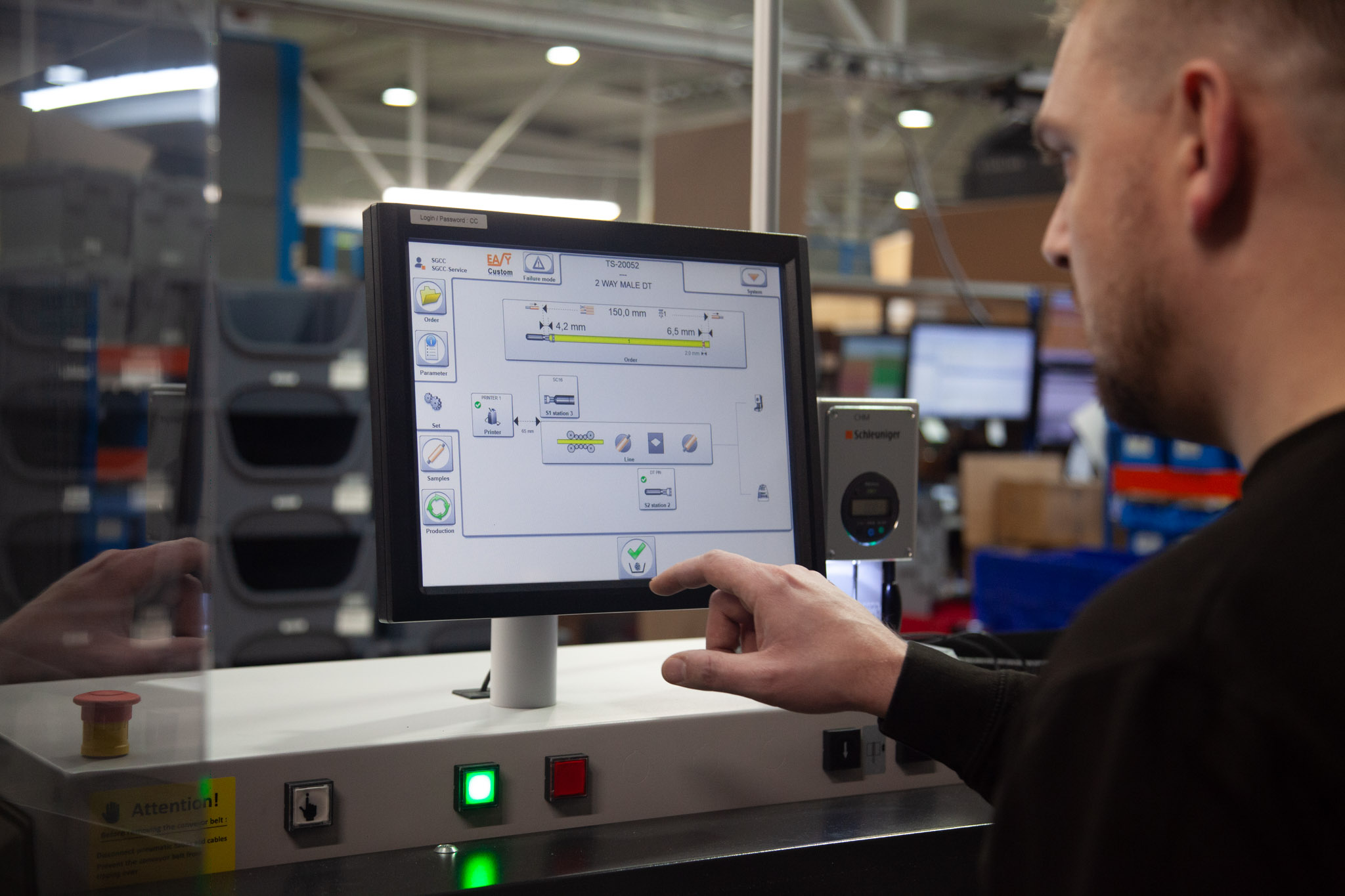
Modern harness shops increasingly deploy fully automated cut, strip, and crimp equipment to stabilize quality and accelerate schedules for control assemblies. Facilities that adopted automated wire processing report roughly 35% higher throughput and about 12% lower material waste, driven by precise strip lengths and optimized nesting of cuts, as detailed in 3 Trends in Cable and Harness Assembly. Automated crimp modules apply consistent crimp height and force, reducing variation that commonly drives intermittent faults, a comparison reinforced in Automated vs. Manual Wire Harness Assembly. For high volume families, fully automatic lines can trim direct labor by up to 60 percent while raising first-pass yield, according to the Wire Harness Fully Automatic Flexible Production Line market analysis. For OEMs, that translates into shorter lead times, tighter tolerances on conductor preparation, and more predictable panel build durations.
Connection integrity with ferrules
Ferrules remain a practical way to harden terminations that use stranded conductors in cage clamps or screw terminals. By compressing strands into a uniform pin, ferrules reduce stray filaments that cause partial contact and mitigate micro-arcing, which protects sensitive I/O and power distribution rails. They also stabilize contact resistance over time by limiting oxidation at individual strands, which helps maintain calibration integrity in analog circuits and reduces heat rise in high-current feeders. In vibration-prone equipment, ferrules limit strand migration and cold flow, improving torque retention after service intervals. Actionably, specify bootlace ferrules for stranded conductors up to the terminal’s rated cross-section, require calibrated torque drivers for terminal blocks, and sample pull-test terminations to verify crimp compression against the manufacturer’s window.
OEM collaboration for customized harnesses
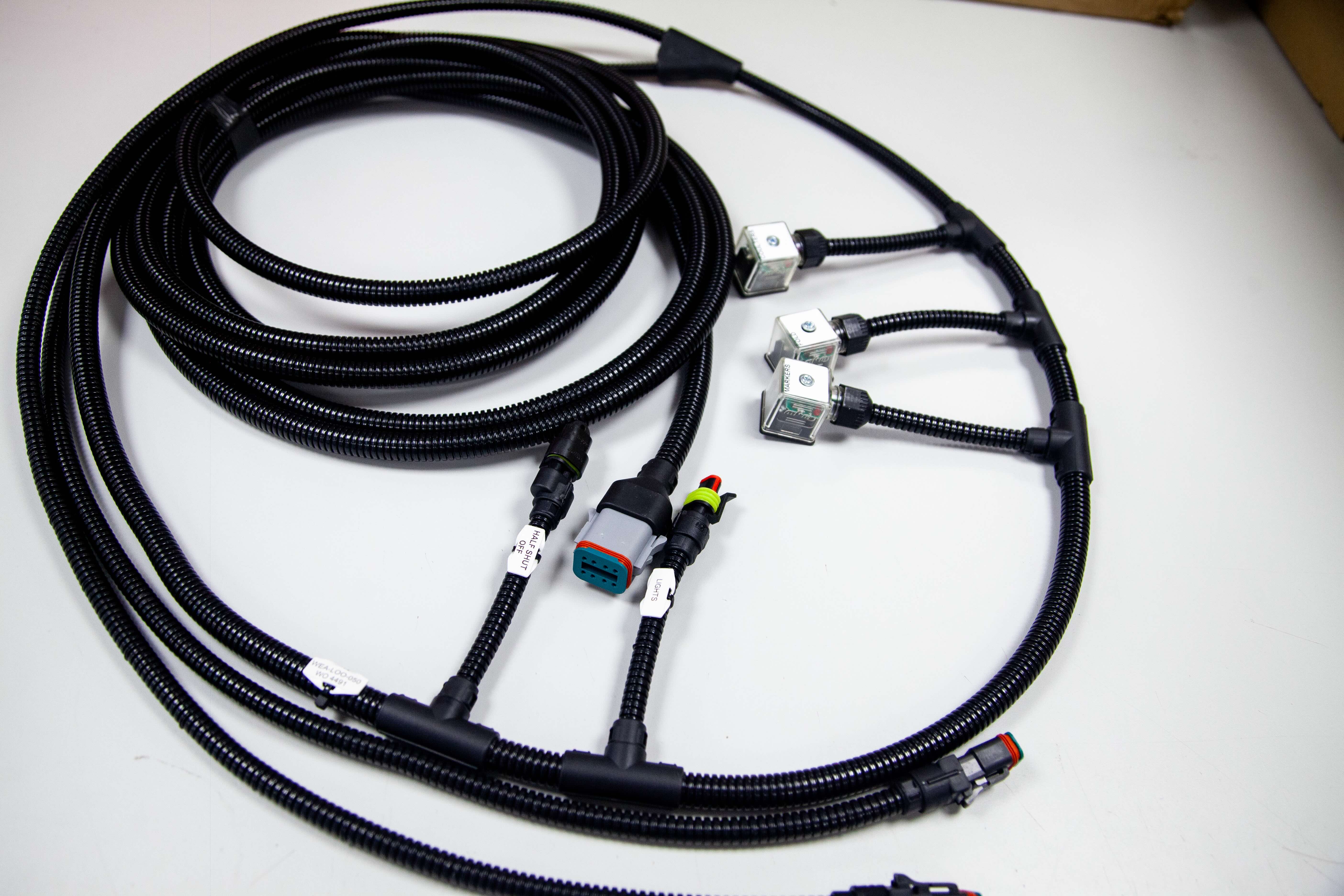
Close collaboration between OEM engineering and harness manufacturers enables tailored routing, service loops, and connector choices that fit enclosure geometry and assembly sequencing. Early design-for-manufacture reviews align minimum bend radius, conductor fill in ducts, and panel ingress points with available automation, which reduces rework during control assembly integration. Standardized drawings and pinouts also pave the way for higher automation readiness, a goal supported by emerging harness design standards that formalize geometry and construction rules. In transportation and mobile equipment, software-defined vehicle architectures can cut wiring content by up to 50 percent, which reshapes harness topology, lowers mass, and improves quality margins. Practical steps include exchanging netlists directly from ECAD, freezing connector libraries across product lines, and gating changes with traceable revision control.
Smart technologies drive efficiency and precision
AI-driven quality control is reshaping inspection, using vision models to detect nicks, missed strands, or out-of-spec crimp heights faster than manual checks, which reduces inspection cost and escapes. IoT-connected presses and testers stream process data like crimp force signatures, enabling statistical process control and predictive maintenance that prevents unplanned downtime. Vision-guided robotics supports connector identification and keyed insertion, especially in high-mix, low-volume programs where fixtures must adapt quickly. Modular and configurable production cells allow rapid changeovers while retaining digital traceability from wire lot to terminal cavity. For dependable builds, implement in-line crimp force monitoring, barcode every lead for end-to-end traceability, and tie test results to serial numbers so OEMs have confidence in every connection.
Case Study: Implementing Proven Wiring Methods
Project scope and wiring approach
On Aviramp’s boarding ramps, Tec-Stop delivered bespoke control box assemblies that fit the mechanical envelope and duty cycle. The build began with a controlled plan that fixed conductor gauges, ferrule types, wire numbering, and duct fill limits, creating a repeatable template. Harnesses were cut to length, bend radius rules were enforced, and power and signal paths were segregated. Terminations were torque specified with verification marks, followed by continuity and I/O tests. See our overview of Tec-Stop control box assembly practices.
Labeling and structured methods
Clear terminal, device, and cable labeling cut commissioning time and fault isolation. A numeric schema tied each wire to the schematic and the digital traveler, so mismatches surfaced during in-process checks instead of at site acceptance. This mirrors guidance that clear product identification in manufacturing improves early error detection and traceability. For high-mix orders, structured kits and consolidated SKUs simplified materials control. The practical effect was fewer rework loops and steadier lead times.
Consistency in quality and performance
Consistency was driven by ISO 9001 aligned work instructions and closed-loop feedback. First-article approvals with photos became visual standards at each cell. Wire ducts and lacing fixed routing, and color coding plus ferrules preserved identification over the product lifecycle. Industry data shows AI-driven quality control is reducing inspection cost and raising detection rates, so our process is ready to add camera checks and analytics as customers adopt Industry 4.0. The result is predictable control assembly performance across batches.
Customer outcomes and lessons learned
Aviramp received assemblies that were easier to service, because labeling matched the drawing set and device naming. Commissioning was faster, since field conductors were landed quickly and I/O was verified against the attached test report. Key lessons were to lock naming conventions early, maintain torque documentation, and right-size ducts to allow modular variants. Planning sensor breakouts and data paths prepares OEMs for IoT monitoring and predictive maintenance. Applied consistently, these practices give confidence in every connection.
Navigating the Future: Implications for OEMs
UL 508A revisions: safety and design implications
The 2025 UL 508A revisions align with NFPA 79 and reset several baselines for control assemblies. Control circuits are limited to 120 Vac and 250 Vdc, E-Stop becomes application specific, disconnecting means gain flexibility, Class 2 source options expand, and one port SPDs now require an SCCR. OEMs should revalidate SCCR calculations, select SPDs with published SCCR, and update schematics and labels that identify upstream disconnects when used. Document the rationale for any E-Stop omission and train teams on creepage, clearance, and conductor sizing at the new limits, using the 2025 UL 508A revisions as your reference.
High mix, low volume becomes the operating norm
HMLV production is becoming the default in panel shops and harness lines, with frequent changeovers that can erode consistency. Cobots can take over drilling, fastener insertion, or label placement, while AI driven visual inspection has shown defect and cost reductions in electronics manufacturing. Stabilize small lots by standardizing ferrules, clear numbering, and wire duct, and by enforcing bend radius and cable length targets in the traveler. Use digital work instructions with barcode kitting and in process torque capture, then track first pass yield and changeover time as leading indicators.
Looking ahead: technology and customization for OEM advantage
Expect digital twin verification for thermal and SCCR pre checks, AI assisted auditing of component choices, and gradual convergence of UL, IEC, and CE requirements. IoT ready control assemblies will support predictive maintenance and require basic cybersecurity at the panel network edge. Customization remains the differentiator, so build option matrices around modular backplates, pre terminated harness kits, and pluggable, clearly labeled connectors to offer variants without unique part numbers. Tec-Stop supports this model with precise wiring solutions, disciplined documentation, and calm communication so stakeholders gain confidence in every connection.
Conclusion and Key Takeaways
Across the analysis, one theme is consistent: safe, reliable control assemblies come from disciplined wiring methods and data-informed design choices. Ferruled terminations, clear numbering and labeling, optimized cable length, and respect for minimum bend radius reduce loose strands, mis-termination, and intermittent faults. These fundamentals now intersect with Industry 4.0, where IoT-enabled devices and advanced sensors allow real-time diagnostics and predictive maintenance. AI-driven quality control is also maturing, improving defect detection while lowering inspection cost, and modular manufacturing lines are reshaping how builds are configured and scaled. Even upstream changes, such as software-defined vehicles that cut wiring content by roughly 50 percent, are pushing harness practices toward higher integration and better documentation.
OEMs can act now by standardizing ferrules and terminal identification, defining torque and bend-radius specifications in drawings, and budgeting cable lengths to minimize slack. Plan assemblies for secure IoT ingress and edge analytics, then validate with test coverage targets, for example 100 percent continuity plus dielectric withstand on power and control circuits. Where feasible, add AI-assisted inspection at FAT to reduce escapes and speed corrective action. Tec-Stop supports these practices with repeatable wiring solutions, UL 508A compliant assemblies, controlled documentation, and transparent communication from quote through run-off. If you need dependable builds that integrate proven methods and measured innovation, our team is ready to give your operators and customers confidence in every connection.