If a termination fails under vibration or thermal cycling, the root cause often starts at the crimp. For teams balancing reliability, throughput, and cost, understanding double crimp vs single crimp is essential. Both approaches can produce compliant terminations, yet their geometry, force distribution, and inspection criteria differ in ways that matter in real assemblies.
In this comparison, you will learn what each crimp actually does at the barrel, conductor, and insulation support. We will quantify effects on contact resistance, voltage drop, and gas tightness. We will compare pull-out strength, strain relief, and vibration durability, supported by common acceptance metrics such as microsection analysis and tensile testing. You will see how tooling, die profiles, and calibration affect outcomes, and what IPC/WHMA-A-620, UL 486A-B, and typical OEM specs imply for each option.
By the end, you will know when to select a double crimp for high-vibration or long service life, when a single crimp is sufficient for static installations, which failure modes to watch for, and how to validate the choice with process capability and inspection.
Understanding Crimping: Basics and Importance
What crimping is and why it matters
Crimping is a cold-forming process that compresses a terminal barrel around conductor strands to create a gas-tight mechanical and electrical bond. In wiring solutions and control panel assemblies, crimping is preferred because it is fast, repeatable, and compatible with automation, which supports consistent quality across large builds. Properly executed crimps maintain conductor integrity without introducing heat, so there is no insulation shrink, wick, or damage to adjacent components. In the context of double crimp vs single crimp, a double crimp secures both the conductor and the insulation for added strain relief, while a single crimp secures only the conductor. For a concise comparison of process speed, mechanical strength, and heat risk, see this overview of crimping vs soldering.
How crimping enhances electrical connectivity
A well-formed crimp creates a gas-tight interface that excludes oxygen and moisture, which stabilizes contact resistance over the life of the assembly. Insulation support, common in double crimp designs, limits conductor flex at the termination and reduces fretting that can cause intermittent faults. Selecting the correct terminal style, for example oval or double-O crimps for insulated terminals, improves strand capture and current-carrying performance. Quality control is critical, so verify crimp height, monitor press force where applicable, and perform pull testing appropriate to wire gauge and strand class. Many OEMs now integrate automated applicators with in-process monitoring to catch out-of-tolerance crimps in real time, improving first-pass yield and long-term reliability.
Why crimping is preferred over soldering
Crimped connections provide superior mechanical strength and vibration resistance, which is essential in industrial automation, mobile equipment, and marine applications. Since crimping introduces no heat, it avoids solder wicking that can create a stiff stress riser and eventual conductor breakage. Crimping is also faster than soldering, particularly when using semi-automatic presses or robotic harness cells, which shortens takt time and supports scalable production. As a rule of thumb, use double crimp terminals where assemblies face movement, shock, or temperature cycling, and reserve single crimp for static, well-supported runs inside protected enclosures. These principles set up the practical comparison of double crimp vs single crimp that follows.
Comparison Criteria: How We Evaluate Crimping Techniques
Electrical performance: resistance and conductivity
When we compare double crimp vs single crimp, we measure joint resistance and voltage drop under load. Single crimps can deliver a gas tight bond if crimp height is within spec and all strands are captured; any under-crimp or strand splay raises resistance and heat. Double crimps, with discrete conductor and insulation barrels, stabilize geometry and increase effective contact area, which lowers milliohm values and improves current margin. Guidance for insulated ring terminals highlights these gains in conductivity and grip advantages of double-crimp ring terminals.
Mechanical integrity: strength and durability
We validate mechanical performance with pull-force testing, vibration exposure, and temperature cycling. A correct single crimp can pass pull tests, but it concentrates stress at the barrel and is more vulnerable to strand breakage and fretting on mobile equipment. Double crimping adds insulation support that offloads bending, reduces conductor motion, and mitigates pull-out under shock. Transportation guidance reflects this, specifying dual-crimp, tin-plated copper, nylon-insulated terminals in 22 to 10 AWG, rated to 220 F Caltrans crimp and terminal requirements. Better strain relief also reduces corrosion risk and intermittent faults in long-life wiring solutions.
Installation process: simplicity and tools required
Single crimps are faster and can be suitable inside protected control panel assemblies with low vibration and fixed routing. They typically use one die geometry and a ratcheting crimper, with crimp height checked by a go/no-go gauge. Double crimps add a second operation or a two-nest die; in return, they broaden the acceptable process window and reduce rework across varying strand classes. On semi-automatic applicators, cycle time impact is minimal and first-pass yield often improves. For field work, reserve single crimp for modest loads; default to double crimp for mobile, HVAC, marine, and high-flex conductors.
Double Crimp Terminals: A Deep Dive
Electrical performance and conductivity
Double crimp terminals use separate barrels for the conductor and insulation, which increases the contact interface to the strands and stabilizes the joint geometry. The result is lower joint resistance and better conductivity, typically captured as repeatable milliohm values with tight Cpk across a production run. Under load, this produces smaller voltage drops and less heat rise in control power and motor circuits. Compared with single crimp, the dual-zone compression tightens electrical performance when wire stranding or diameter varies, and copper or brass constructions with proper plating further optimize conductivity, as reflected in the crimp terminal market overview.
Mechanical grip and reliability in harsh duty
By gripping the conductor and then the insulation, double crimps add integral strain relief that resists vibration, pull, and thermal cycling while raising pull-out forces relative to single crimp equivalents. The insulation crimp also prevents micro-motion at the conductor barrel that can initiate fretting corrosion and eventual intermittents. In mobile equipment, conveyors, and compact control panel assemblies that see frequent service movement, this stability reduces troubleshooting and rework. Insulated styles with oval or double O forms are built for this purpose, providing a secure bite without nicking strands, see the advantages of insulated double crimp terminals.
Industry 4.0 integration and when to choose double crimp
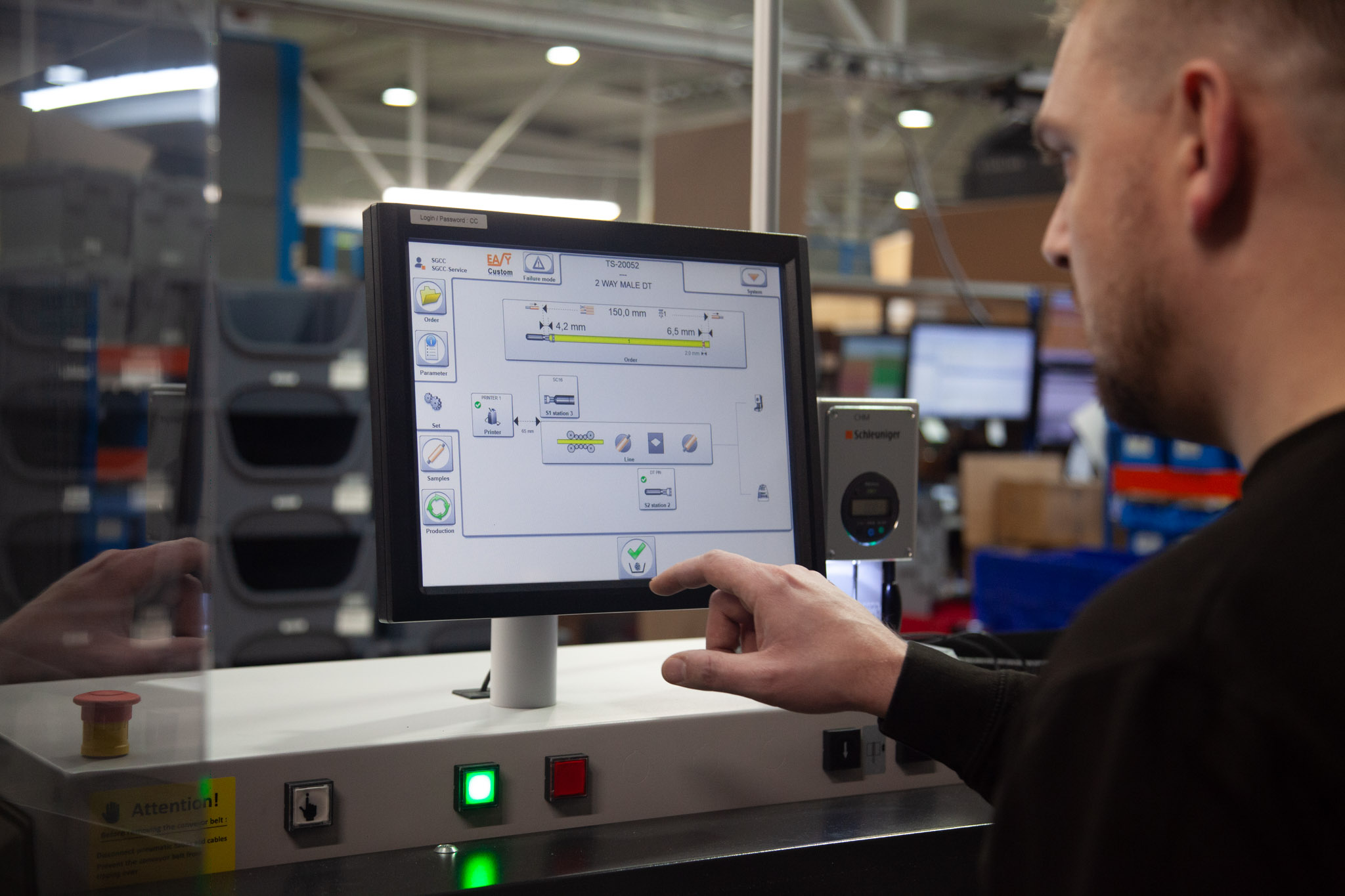
When evaluating double crimp vs single crimp in an Industry 4.0 context, modern presses and applicators include servo actuation, touchscreen setup, and crimp force monitoring, which improves consistency and traceability in high volume builds. These advancements in automatic crimping machines enable in-process detection of missing strands and out-of-spec crimp height, and they support predictive maintenance to reduce downtime. For selection, choose double crimp for high vibration zones, field-serviceable connections, and any circuit where uptime is critical, then reserve single crimp for stable, fixed wiring with controlled routing and low mechanical stress. To realize the benefit, specify matched terminals and applicators, document crimp height and pull-test limits, and use first-article micrographs with lot-level traceability across builds.
Single Crimp Terminals: Suitability and Limitations
Adhesive-type sealing and required tools
Single crimp terminals pair well with adhesive-lined heat shrink, creating a sealed splice that resists moisture and contaminants. The workflow is straightforward, crimp the terminal once on the conductor, then apply controlled heat to the sleeve until the adhesive wets and forms visible fillets at the ends. Products like Krimpa-Seal heat‑shrink butt splices illustrate this approach for marine and automotive splices where environmental sealing is important. A temperature controlled heat gun is required to activate the adhesive uniformly; open flames introduce uneven heating and risk insulation damage. Teams that standardize on heat activation may also consider heat‑activated solder seal connectors for certain field repairs, although these are a different joint style and not a direct substitute for crimp-only terminals.
Mechanical security vs double crimp
A single crimp grips only the conductor, which limits mechanical retention and vibration resistance compared to a double crimp that also captures the insulation. The additional insulation crimp in a double design stabilizes the wire at the barrel entry, reducing strand flexing and pull-out under vibration. For non-mobile control panel interiors with limited cable movement, a correctly executed single crimp with adhesive-lined shrink can meet electrical and environmental requirements. Quality controls matter, use the correct die for the terminal, verify crimp height, and perform pull testing appropriate to the wire gauge to confirm retention. Sealing helps block moisture, but it does not increase mechanical strength; consider single crimps a seal-first solution rather than a high-retention joint.
Where single crimps are optimal
Choose single crimps when the priority is compact, sealed connections inside protected enclosures or junction boxes, and when harnesses see minimal vibration. They are useful for sensor pigtails, instrument interconnects, and short in-panel splices where clearance is tight and a second crimp barrel would add bulk. The approach is cost efficient and keeps the tool set simple, a ratcheting crimper plus a heat gun, which benefits small-batch builds and field service. Avoid single crimps in engine compartments, mobile equipment, or anywhere cable flex and shock loading are expected. If they must be used in moderate vibration, add strain relief with clamps or lacing and schedule periodic inspection. This context helps frame the later side-by-side comparison of double crimp vs single crimp across durability and lifecycle cost.
Side-by-Side Comparison: Double vs Single Crimp
Electrical and mechanical performance analysis
Double crimp vs single crimp shows clear differences in how a joint behaves under load. With a conductor crimp plus a separate insulation support, a double crimp stabilizes the strands and increases contact interface, which lowers resistance and mitigates voltage drop. Dual-stage crimps lower the chance of loosening after thermal cycling, see crimp vs full crimp guidance. Mechanically, a properly executed double crimp can approach the tensile capacity of the parent wire and resists vibration and flex fatigue better than a single crimp, as shown in this technical comparison of crimped connections. For insulated terminals, oval or double-O insulation crimps add strain relief that prevents conductor movement, keeping the gas tight conductor barrel undisturbed during service.
Tools and techniques: required vs advanced options
Tooling maps closely to technique. Single crimp connections can be made with basic manual crimpers, but consistency improves with ratcheting tools that control force and release. Double crimping typically uses a die with two stations, one sized for the conductor barrel and one for insulation support, aligning both compressions in one stroke. For higher volumes or larger gauges, hydraulic or battery powered crimpers reduce operator load and help hold crimp height within spec, which is critical to a gas tight joint. Regardless of method, verify results with strip-length gauges, crimp-height micrometers, and pull tests matched to AWG and terminal datasheets.
Cost implications and efficiency considerations
Cost and efficiency depend on volume, environment, and rework risk. A double crimp adds seconds and may need a higher cost die, yet reliability offsets this through fewer callbacks and less troubleshooting. With 2,000 terminations, cutting rework from 1 percent to 0.2 percent can save dozens of technician hours across test, inspection, and commissioning. Choose single crimping for protected, static enclosures where harnesses are strain relieved and duty cycles are low. Choose double crimping for mobile equipment, HVAC compressors, conveyors, and any assembly exposed to vibration or field service, where maintaining conductivity and mechanical retention protects uptime and ensures dependable wiring solutions.
Crimping Innovations: The Future of Wiring Solutions
Smart, connected crimping for measurable quality
IoT-enabled presses are moving crimping from a pass/fail operation to a measured process. Connected crimping cells stream crimp height, press force signature, pull-force and cycle counts to dashboards, enabling trend analysis, automatic lot traceability and event-based alerts. In hose and terminal applications, smart crimping platforms already use recipe locking, operator guidance and remote diagnostics to cut rework and downtime, as described in GlobalSpec’s overview of smart crimping. For wiring solutions where double crimp vs single crimp decisions affect durability, these data services make the difference visible by correlating vibration testing and field returns to crimp signatures. Teams can then tighten process windows, standardize on validated terminals and document capability, which gives OEMs confidence in every connection.
Advanced tools improving precision and throughput
Modern servo-driven crimp presses deliver tighter and more repeatable crimp heights than legacy pneumatic units, which directly lowers joint resistance variability. Automatic terminal crimping machines with digital recipes control strip length, insertion depth and press force in one workflow, so a double-crimp terminal’s conductor and insulation supports are formed within the same quality envelope. High-speed automatic crimpers support parallel lanes for small-gauge conductors, raising throughput without sacrificing pull-out performance. Ultrasonic crimping is gaining adoption for fine-strand, aluminum and mixed-metal applications, where precise energy control reduces flash and strand damage. For medium-volume control panel assemblies, a hybrid cell that pairs a servo press with semi-automatic wire preparation often provides the best balance of cost, changeover speed and first-pass yield.
Process chemistry, lubricants and contact integrity
Lubricants can improve tool life and consistency, but placement and chemistry matter. Apply non-migrating lubricants to tooling pivots and slides, not to conductor barrels or wire strands, to avoid increasing contact resistance. Avoid silicone oils on terminals, since residues can interfere with plating wetting and later bonding steps. If lubrication on feed tracks is unavoidable, validate with before-and-after pull-force and micro-resistance tests, then monitor capability indices to confirm no drift. For double-crimp terminals with insulation support, small friction changes can alter barrel deformation, so verify crimp height and bell-mouth dimensions at start-up and after maintenance.
A practical roadmap is to standardize on double-barrel terminals where vibration, tension or duty cycles are high, an approach consistent with the mechanical advantages outlined for double-barrel fittings in this overview. Pair those terminals with connected, servo-controlled presses and a defined lubrication plan. Reserve single-crimp workflows for stable, low-vibration enclosures with stringent sealing steps, and always confirm performance with pull-force and resistance audits. This keeps wiring solutions precise, efficient and repeatable.
Recommendations: Choosing the Right Crimping Solution
Practical selection guidelines
When comparing double crimp vs single crimp, start with mechanical demand, conductor class, and insulation diameter. Double crimp terminals use separate barrels for conductor and insulation, adding strain relief and stabilizing the joint under vibration. They are preferred where harnesses move, see shock, or will be serviced often. Single crimp terminals secure only the conductor, which suits protected runs in rigid panels where the wire is clamped or tied. Size the terminal to wire gauge or cross section and insulation OD, then confirm crimp height and pull-out during first article builds. Crimped terminations typically outperform soldered splices for mechanical strength and environmental resistance.
Application-specific recommendations
High vibration or mobile equipment, such as marine pumps, engine-bay harnesses, and off-highway controls, benefits from double crimps that lock the insulation and reduce conductor flex. For indoor control panels with supported wireways and strain relief at terminations, single crimps are acceptable and faster to assemble. Where moisture or chemicals are present, select insulated terminals and consider adhesive-lined heat shrink for sealing, then choose single versus double based on expected movement. Fine-stranded conductors and small cross sections often favor double crimps for better strand containment. Always validate with crimp height checks and pull tests, and record results in your first article package.
Why choose Tec-Stop
Tec-Stop delivers precise strip, crimp, and termination services that give OEMs confidence in every connection. Precision stripping avoids strand nicks, and calibrated applicators hold crimp height within documented windows. We verify insulation support and conductor compression through visual inspection and pull testing. ISO 9001 processes provide traceability and in-process audits. Where suitable, we apply force-monitored presses for quality. The result is consistent, corrosion-resistant joints without overbuilding cost.
Conclusion: Key Takeaways for Optimal Wiring Solutions
Reliable crimps keep resistance stable, block moisture ingress, and prevent intermittent faults that can stop a line. In double crimp vs single crimp evaluations, a conductor crimp plus an insulation support typically delivers higher pull strength and vibration durability, particularly with oval or double-O terminals used on insulated leads, while single crimp offers speed for benign environments. Industry research continues to favor crimped connections over soldered joints for mechanical strength and environmental robustness, and quality remains decisive because poor crimps drive corrosion and failures. Tec-Stop builds to that standard with calibrated applicators, measured crimp height, press-force monitoring, and traceable lots across all wiring solutions and control panel assemblies. For OEMs, the actionable path is clear: specify conductor class and insulation diameter, define vibration and thermal profiles, require pull-test and crimp-height acceptance data, then select double crimp where retention or strain relief is critical. When simplicity is sufficient, choose single crimp with sealed transitions and verified tooling.