Clean, predictable wiring separates a reliable build from an electrical time bomb. If you are ready to move beyond patch fixes and into repeatable methods, this tutorial will show you how to design, assemble, and install a vehicle wiring loom that is safe, serviceable, and easy to troubleshoot. We will start with circuit planning and documentation, including how to interpret wiring diagrams, create a pinout, and map harness branches. You will learn to calculate loads, select wire gauge based on ampacity and run length, and size fuses and relays correctly. We will cover connector families and terminals, proper crimping and strain relief, solder use cases, and sealing strategies. Harness routing best practices follow, with guidance on bundling, abrasion protection, heat management, and grounding topology that minimizes noise and voltage drop. Finally, you will validate your work with continuity checks, voltage drop testing, and fault isolation procedures. By the end, you will be equipped to build or rework a vehicle wiring loom to a consistent, professional standard.
Understanding Vehicle Wiring Looms
What a vehicle wiring loom does
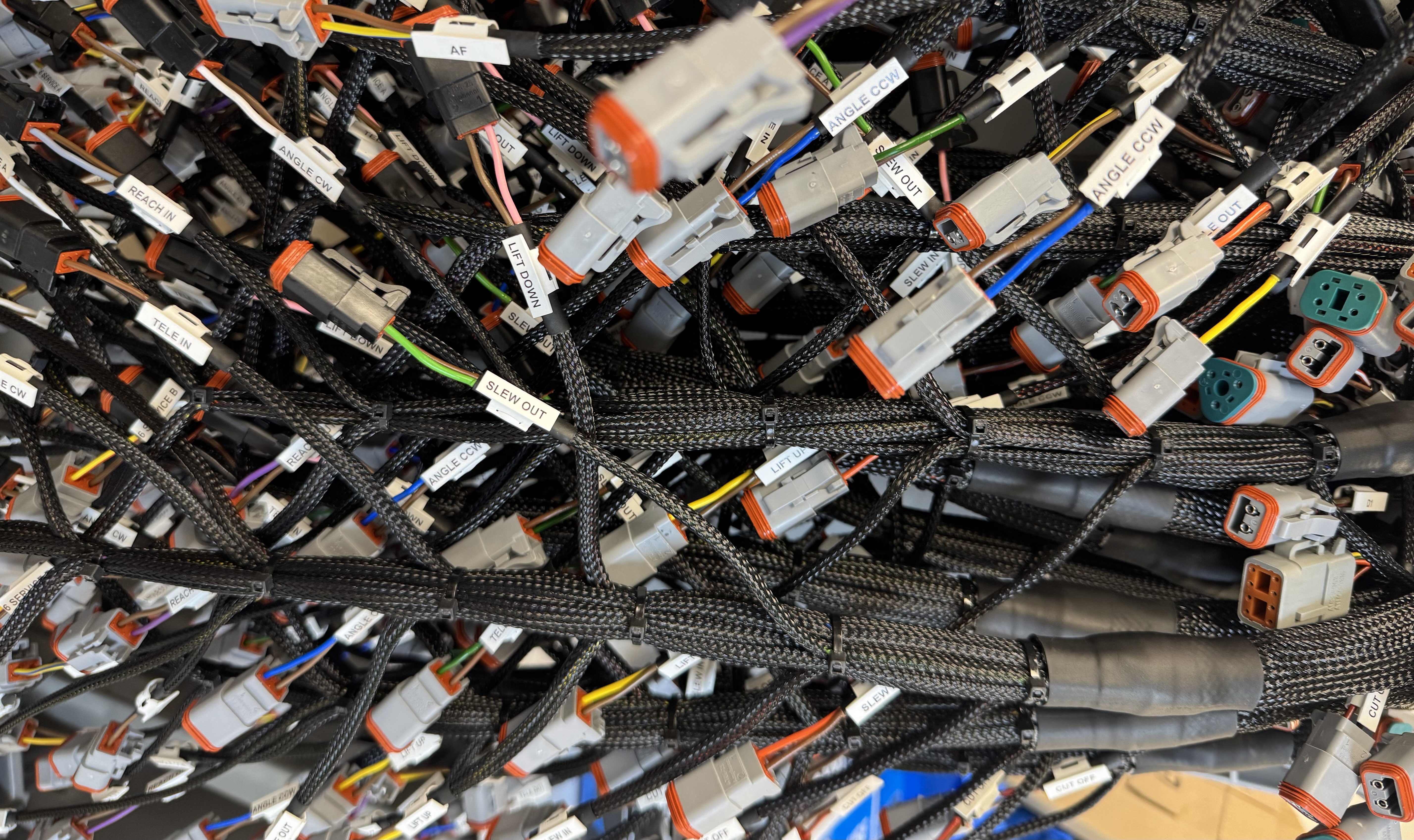
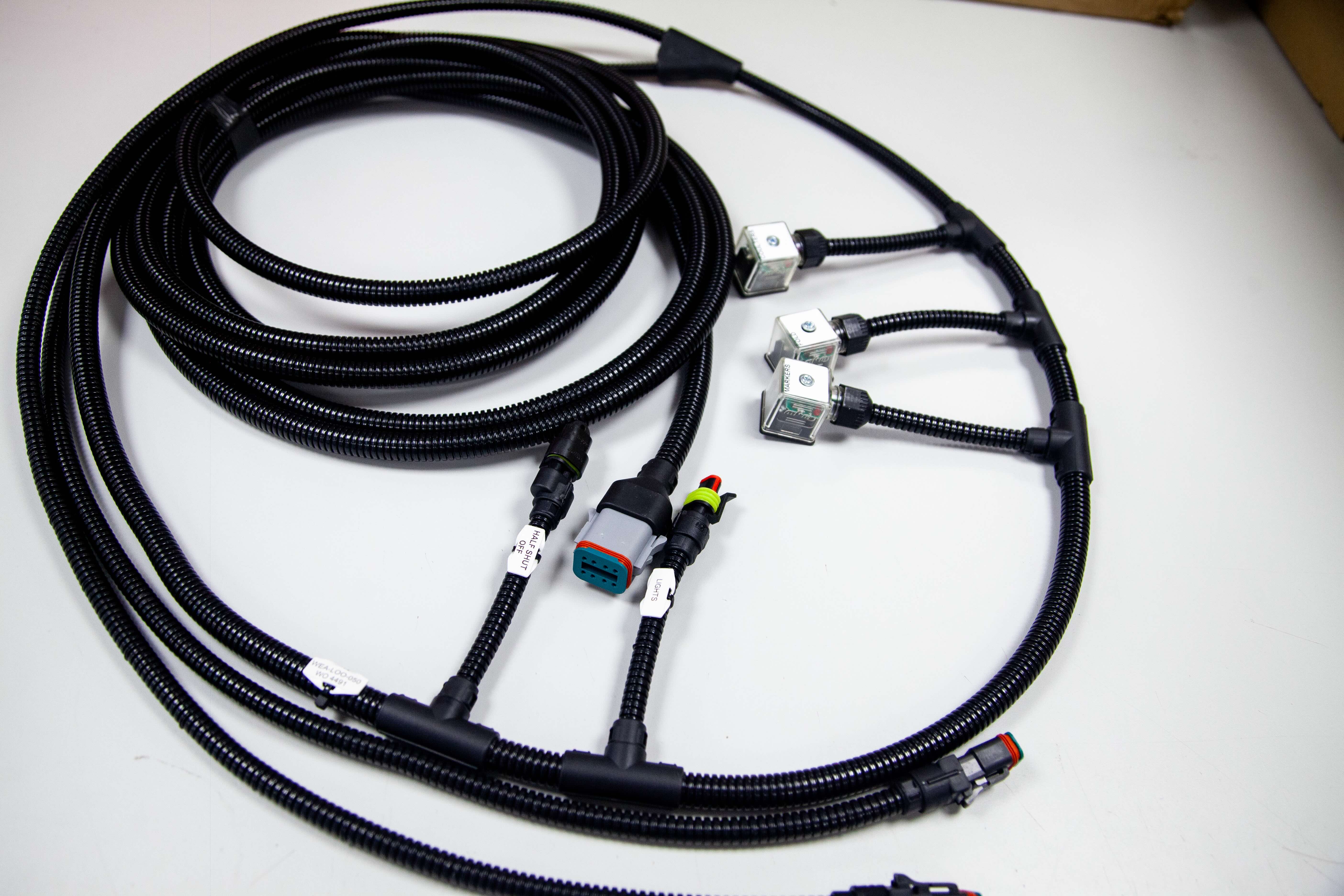
A vehicle wiring loom is an organized assembly of conductors, terminals, and connectors that routes power and data between powertrain, chassis, and body functions. Bundled with tapes, sleeves, or overmolds, it protects circuits from vibration, abrasion, and moisture while simplifying installation and service. By consolidating dozens of individual circuits into a defined bundle, the loom reduces assembly time, improves fault isolation, and maintains consistent electrical performance across the vehicle life. For a concise primer on construction and purpose, see this overview of a cable harness.
Electrification and rising complexity
Electrification increases conductor cross sections for high voltage paths, adds battery management and thermal control circuits, and multiplies signal lines for ADAS and domain controllers. Even conventional platforms already carry extensive wiring; industry reporting cites models with over 2.2 kilometers of wire linking more than 100 sensors and control units, underscoring packaging and service constraints (challenges for wiring harness development). To manage this, OEMs are adopting zonal electrical architectures that shorten runs, standardize interfaces, and reduce mass, which lowers cost and improves reliability. Lightweighting through aluminum conductors, flat cables, and optimized fuse layout further mitigates added EV content.
Market signals and what matters for OEMs
The automotive wiring harness market was about 48.7 billion USD in 2024 and is projected near 63.1 billion USD by 2033, with broader wire harness demand rising from roughly 74.9 to 120.2 billion USD in the same period. EV growth is pulling related equipment, with harness taping machinery sales increasing about 12 percent annually through 2030. For engineering leaders, relevant actions include early definition of zonal boundaries, model-based BOM clarity, and interim physical builds for routing validation. Emphasize zero-defect culture with traceability, electrical test coverage, and optical inspection readiness to reduce launch risk and deliver dependable assemblies that give OEMs confidence in every connection.
Key Components of a Vehicle Wiring Loom
Essential components of a wiring loom
A vehicle wiring loom integrates conductors, interfaces, protection, and retention hardware into a single assembly that survives vibration, heat, fluids, and service operations. Core elements include wires and cables sized by load and voltage drop, typically 0.35 to 6.0 mm² in body circuits and heavier gauges in power distribution. Insulation is chosen for environment, for example thin-wall cross-linked polyethylene for under-hood heat, or shielded twisted pairs for CAN, LIN, and ADAS links. Connectors, housings, and terminals form robust interfaces, often with secondary locks and perimeter seals to maintain contact force and keep out moisture. Protective coverings such as PVC or fabric tapes, braided sleeving, heat-shrink, and convoluted tubing set abrasion, noise, and thermal performance. Grommets, boots, clips, P-clamps, and tie mounts fix the loom to structure, control bend radius, and prevent fretting. Labels and markers, including heat-shrink or flag labels, support serviceability and traceability.
Terminations, connections, and assembly methods
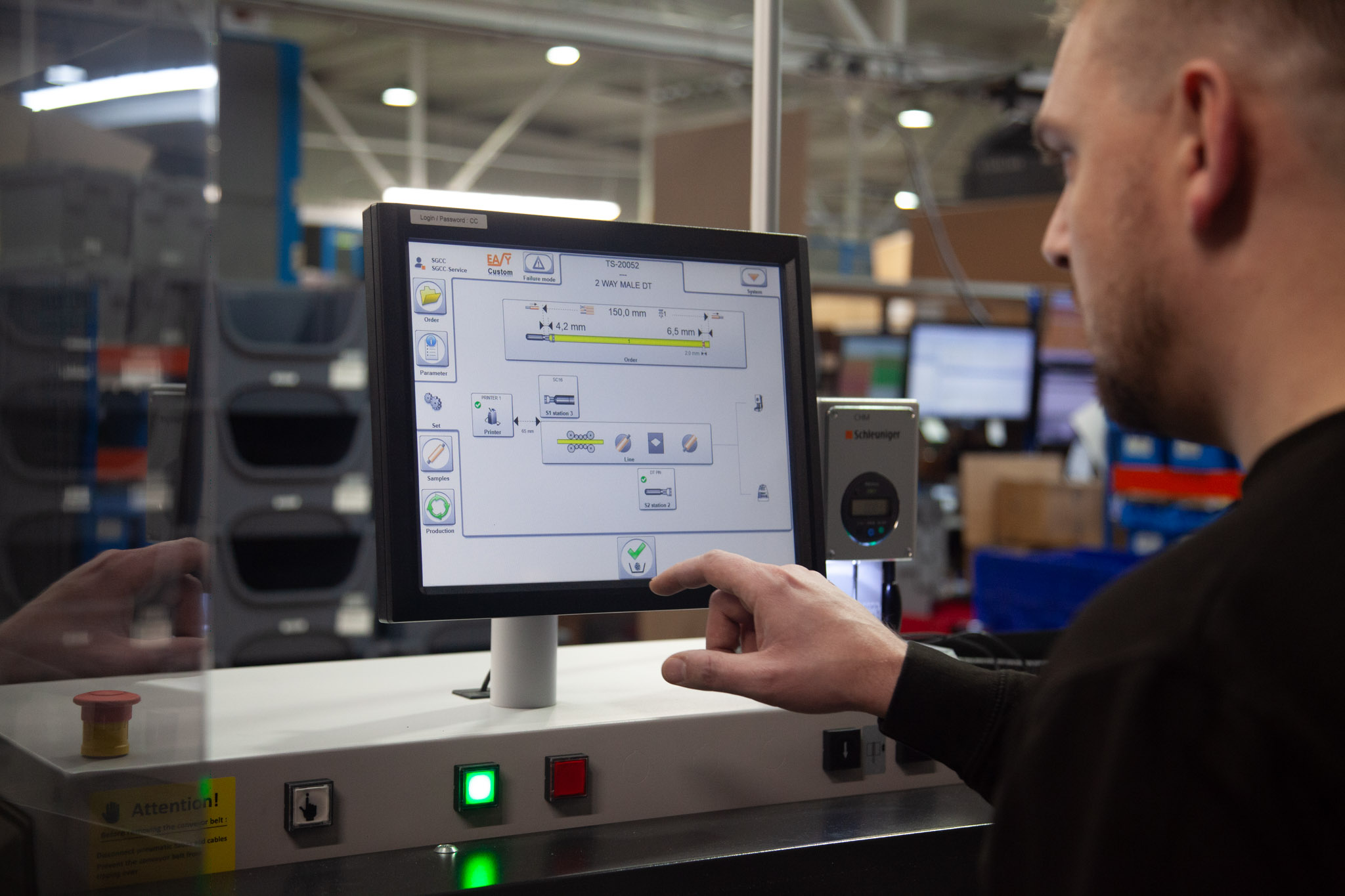
Terminations rely on controlled crimping that fuses conductor strands and terminal barrels into a gas-tight joint. Production checks include crimp height measurement, cross-section analysis during validation, and pull-force testing to confirm mechanical strength. Solder is reserved for specific use cases, then strain-relieved with adhesive-lined heat-shrink. Connector assembly uses keying to prevent mis-mates, cavity plugs to maintain sealing, and terminal position assurance features to guard against partial insertion. Loom bundling uses tapes for flexibility in cabin zones, and corrugated or braided sleeving where abrasion is likely. Routing follows defined clipping points, clearance from sharp edges, and minimum bend radii; abrasion interfaces receive edge protection. As electrification rises, complexity increases, and even support equipment scales, with wire harness taping machine demand projected to grow about 12 percent annually through 2030. Automated optical inspection is emerging to verify pin presence, color sequence, and label placement at scale.
How Tec-Stop ensures component quality and reliability
Tec-Stop aligns materials, tooling, and process control to deliver consistent wiring solutions. We operate under ISO 9001 controls, use validated applicators and calibrated crimp tooling, and maintain first-article records for each terminal and wire family. Every production loom is electrically verified with continuity and isolation checks, and critical assemblies receive hipot testing. Interim builds and physical fit checks confirm routing, clip strategy, and service clearances before freeze. Traceability is standard, with serialized labels linked to material lots and in-process measurements to support a zero-defect culture. For EVs and ADAS-heavy platforms, we specify thin-wall insulation for lightweighting, shielding where EMC margins demand it, and sealed interfaces that match the vehicle environment. This approach gives OEMs confidence that each assembly performs as intended, from prototype through volume production, and sets up the next step, detailed routing and mounting, for a smooth handoff.
Designing a High-Performance Vehicle Wiring Loom
Lightweight and flexibility as first-order design inputs
For a high-performance vehicle wiring loom, mass and bendability are not afterthoughts, they drive the architecture. Large vehicles can carry kilometers of conductors, so every gram removed compounds into measurable fuel or range gains. Practical levers include thin-wall, high temperature insulation to reduce overall diameter, conductor downsizing validated by voltage drop analysis, and selective use of aluminum conductors with proven crimp terminations. Published case studies show topology optimization and material selection can cut harness mass by up to 22 percent, which is meaningful at fleet scale lightweight harness strategies. Flexibility matters for installation and durability; specifying minimum bend radius targets, typically 8 to 10 times cable outer diameter for dynamic sections, reduces fatigue in doors and liftgates. Use braided sleeving where frequent motion occurs, and convoluted tubing where abrasion or splash is expected.
Precision engineering for performance and uptime
Precision begins at CAD, with 3D route studies that lock clip spacing, grommet interfaces, and tolerance stack-ups before prototype. For EV and ADAS content, maintain defined separation between high voltage and low voltage bundles, enforce shield continuity on 100 ohm Ethernet and use 120 ohm twisted pair for CAN FD to preserve signal integrity. Apply data-driven DFM, including AI-assisted BOM extraction and cavity verification, to eliminate part count and mis-pins early. Validate with interim builds and physical try-outs, then qualify through continuity, hipot, insulation resistance, and end-of-line functional testing. A zero-defect culture supports traceability from crimp pull-force records to serialized labels; automated optical inspection, increasingly trained with synthetic data, catches orientation and marking errors before shipment.
How Tec-Stop enhances efficiency and safety
Tec-Stop designs and builds vehicle wiring assemblies that balance weight, flexibility, and robustness. We optimize conductor gauges and insulation systems to reduce mass while meeting thermal and voltage drop limits, then package looms for smooth install and service access. Our assemblies use proven protection schemes and routing discipline to mitigate chafe, fluid exposure, and thermal hotspots, improving uptime and safety. Rigorous inspection and documented test plans give OEMs confidence in every connection, supported by clear communication and dependable delivery. Explore our approach and product scope here: Tec-Stop vehicle wiring looms.
The Role of Automation and AI in Wiring Solutions
AI-driven quoting and BOM extraction
EV and ADAS content are pushing harness complexity, and the automotive wiring harness market is projected to grow from 48.72 billion USD in 2024 to 63.13 billion USD by 2033. To keep quoting responsive, AI pipelines parse drawings, PDFs and CSVs, normalize part numbers, then flatten multilevel BOMs while flagging duplicates and alternates. Procurement signals such as price breaks and lead time feed the cost model so labor, scrap and risk are priced consistently. Platforms for automated BOM processing and RFQ management and wire harness quoting and BOM tools illustrate this approach. Practical steps include maintaining a canonical part library, calibrated time standards for crimp, seal and wrap, and routings tied to conductor gauge.
Automated installation and inspection
Automation extends into build and installation. Cut, strip and crimp cells with in-process crimp force monitoring produce consistent terminations, while automated taping equipment is scaling with EV demand, with taping machine sales expected to grow about 12 percent annually through 2030. Robots can assist with connector insertion using force torque sensing and vision, and deep learning improves detection of cavity keys and latch states. Design for automation improves yield, for example polarized housings, lead-in chamfers, robot-grippable features, and fiducials for vision. Plan for test by exposing points, using color contrast on critical features, and standardizing pin maps for automated continuity and hipot. A zero defect culture is reinforced by digital travelers and complete device history records.
Tec-Stop’s integration of modern automation
At Tec-Stop, we integrate these practices to deliver reliable wiring solutions and control panel assemblies. AI serves as a co-pilot, auditing incoming BOMs, aligning them to our master data, and surfacing risks, while engineers make final decisions on materials and routing. During build, connected test benches stream continuity and crimp metrics, enabling predictive maintenance on tooling and faster diagnostics in the field. For each vehicle wiring loom, we combine station-kitted harnesses, clear work instructions, and automated label printing to reduce takt variability and improve first pass yield. The outcome is consistent quality and smoother communication with OEM teams.
Ensuring Quality and Compliance
Why CQI-35 matters for vehicle wiring looms
CQI-35, published by AIAG in September 2024, establishes a common language for vehicle wiring loom quality across EV, hybrid, and ICE programs. It applies CQI continuous-improvement tools to crimping, soldering, material handling, and assembly validation, providing measurable checkpoints for engineering and quality. Adopting the guideline standardizes acceptance criteria and reduces variability caused by model mix, option content, and increasing ADAS-enabled complexity. For scope and requirements, see the CQI-35 Wiring Harness Quality Guidelines.
Turning guidelines into fewer warranty claims
To translate guidelines into fewer warranty claims, build a control plan that ties PFMEA to layered process audits, operator certification, and machine capability for strip, crimp, and tin. Apply SPC to crimp height and conductor brush, verify pull-force by lot against OEM spec, and assign results to the harness serial number. Run 100 percent continuity and hipot testing, add representative thermal cycling, and deploy AOI with golden images and synthetic data to catch bent tabs or seal misplacements. The CQI-35 guideline overview highlights process controls that support these actions and help reduce No Trouble Found returns. Close the loop with first-off approvals, defect coding, 8D response, and EOL yield dashboards sized to catch single-point failures before they reach the field.
Tec-Stop’s quality commitment in practice
At Tec-Stop, quality is built into every wiring solution and assembly under an ISO 9001 quality management system aligned to IATF 16949 expectations. We barcode incoming lots, maintain digital travelers for full traceability, and monitor tool wear, applicator calibration, torque, and insertion depth on critical terminations. Every loom receives 100 percent electrical test with fixture validation, and we trend first-pass yield and repair codes to detect latent issues early. Our internal audits reference AIAG CQI-35 clauses, and supplier APQP supports PPAP-level documentation for critical terminals, seals, and housings. These practices create consistent builds, predictable lead times, and confidence that each connection meets its design intent in harsh environments.
Planning for Future Developments in Wiring Looms
Smart wiring looms and ADAS integration
Smart vehicle wiring looms are evolving into instrumented assemblies that serve ADAS bandwidth, diagnostics, and lightweighting targets. Camera and radar branches increasingly carry automotive Ethernet and LVDS, which elevates requirements for impedance control, shield continuity, and 360 degree terminations. Zonal architectures are reducing cross-vehicle runs and enabling shorter, serviceable sub-assemblies that localize power and data. Lightweight choices such as thin-wall insulation, selective aluminum conductors, and composite shielding are delivering double-digit mass reductions when validated for crimp quality and corrosion. Plan ahead by reserving spare pairs and pins for later sensor additions and by defining shield drain and back-shell geometry early in design. See ADAS-driven harness requirements and trends in smart, lightweight harness design.
Impacts of rising EV demand
EV adoption is increasing loom complexity and the rigor of validation. High-voltage trunks at 400 to 800 V demand defined creepage and clearance, orange identification, and hipot plus partial discharge screening, all while coexisting with sensitive low-voltage data paths. Thermal and EMI interactions around the battery, inverter, and charger make segregation rules, shield strategy, and harness routing models critical. Market indicators align with this shift, the wire harness market is estimated near 74.88 billion USD in 2024 and may reach about 120.21 billion USD by 2033, while automotive segments are projected from 48.72 to 63.13 billion USD. Equipment signals mirror this, taping machine sales are expected to climb 12 percent annually through 2030.
How Tec-Stop is preparing
At Tec-Stop we design looms for future features without risking current schedules. Our wiring solutions apply ADAS-ready shield terminations, serviceable zonal breakouts, and defined HV rules for creepage and clearance. We use AI-driven quoting and BOM extraction to lock scope, then run interim builds to verify bend radii, clip strategy, and connector clocking. Quality is built in through barcode traceability, crimp force monitoring, hipot, and camera inspection, with synthetic-data models in evaluation. For EV programs, we supply modular HV sub-assemblies and lightweight options validated by pull-force and salt-spray tests.
Conclusion and Next Steps
Key takeaways
Vehicle wiring looms are increasing in complexity as electrification and ADAS content scale, and the automotive wiring harness market is projected to grow from 48.72 billion USD in 2024 to 63.13 billion USD by 2033. The broader wire harness market is forecast to reach 120.21 billion USD by 2033, while EV momentum is driving related equipment demand, with taping machine sales rising about 12 percent annually through 2030. Precision, durability, and traceability remain non negotiable, supported by interim builds, physical exploration, and zero defect practices. Lightweighting should be treated as a design input, not an afterthought. For example, rationalized branch routing and thin wall insulation can reduce bundle diameter, improve bendability, and simplify clipping without sacrificing current capacity. AI assisted quoting and BOM extraction help compress lead time and reduce manual error in early phases.
Next steps for OEM teams
Start with a concise requirement audit, covering power budgets, high speed data segments, EMC zones, maximum bundle diameter, minimum bend radius, and mass per meter targets. Formalize a gated path, AI driven BOM ingestion with rule checks, interim physical builds on representative bucks, and qualification that includes 100 percent continuity and hipot testing, crimp height SPC, and full barcode traceability. For EV and ADAS branches, specify controlled impedance for 1000BASE T1 or LVDS links, shield termination method, and separation from high current paths. Track outcomes with first pass yield and defects per million to sustain improvement. Tec-Stop can facilitate a rapid DFM review, deliver a pilot assembly with documented traceability, and outline a clear transition to series production. If assured connectivity and consistent execution are priorities, explore Tec-Stop’s wiring solutions and assemblies to give your programs dependable builds and smooth communication from quote to launch.